 YIDINGAIR FILTRATION
Get a quote↗
YIDINGAIR FILTRATION
Technical Guides
2026-09-27
ISO 16890 replaced EN 779 and rates filters by how much of each particulate-matter fraction they remove. This guide explains the groups and how they roughly compare with F-classes and MERV.
Key points
EN 779 rated medium-efficiency filters with a single 0.4 µm test particle and G, M and F classes. ISO 16890 instead measures efficiency across particle sizes and reports it against the size fractions used in air-quality regulation — PM1, PM2.5 and PM10. The result says directly how much fine dust a filter removes from the air people breathe.
| Group | Requirement | Reported as |
|---|---|---|
| ISO ePM1 | ≥ 50% efficiency for PM1, including after discharge | e.g. ISO ePM1 60% |
| ISO ePM2.5 | ≥ 50% efficiency for PM2.5, including after discharge | e.g. ISO ePM2.5 70% |
| ISO ePM10 | ≥ 50% efficiency for PM10 | e.g. ISO ePM10 55% |
| ISO Coarse | < 50% for PM10; rated by gravimetric arrestance | e.g. ISO Coarse 60% |
Efficiencies are reported in 5% steps and a filter is classified in the highest group it qualifies for.
Many synthetic media carry an electrostatic charge that boosts initial efficiency but fades in service. ISO 16890 discharges a media sample and counts the lower result for the ePM1 and ePM2.5 groups. That rewards media whose efficiency is stable — one reason glass-fibre pocket filters and synthetic filters of the same nominal grade can be classified differently.
| EN 779 (old) | Typical ISO 16890 result | Approx. MERV |
|---|---|---|
| G4 | ISO Coarse 60–90% | MERV 7–8 |
| M5 | ISO ePM10 50–60% | MERV 9–10 |
| M6 | ISO ePM2.5 50–65% | MERV 11–12 |
| F7 | ISO ePM1 50–65% | MERV 13 |
| F8 | ISO ePM1 65–80% | MERV 14 |
| F9 | ISO ePM1 > 80% | MERV 15–16 |
Actual results depend on the media; always compare filters by their tested ISO 16890 report. Our older catalogue grades use ASHRAE 52.1 dust-spot efficiency with MERV equivalents.
Roughly — many F7 filters test in the ISO ePM1 50–65% range — but there is no official equivalence. Compare tested ISO 16890 results.
No. HEPA and ULPA filters are classified under EN 1822 / ISO 29463.
ISO 16890 counts efficiency after electrostatic discharge for the ePM1 and ePM2.5 groups, so media that relied on charge can classify lower.
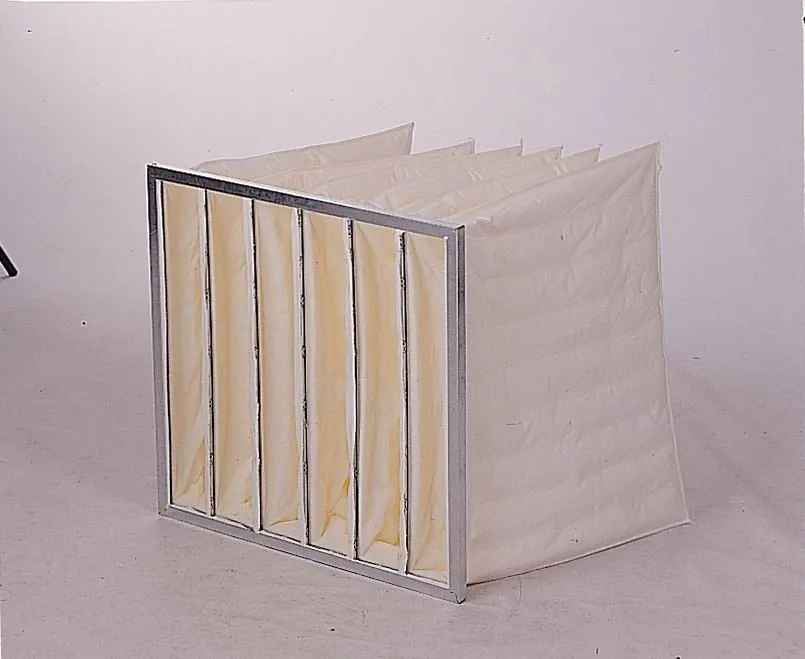
Multi-pocket filtration with synthetic fiber media.
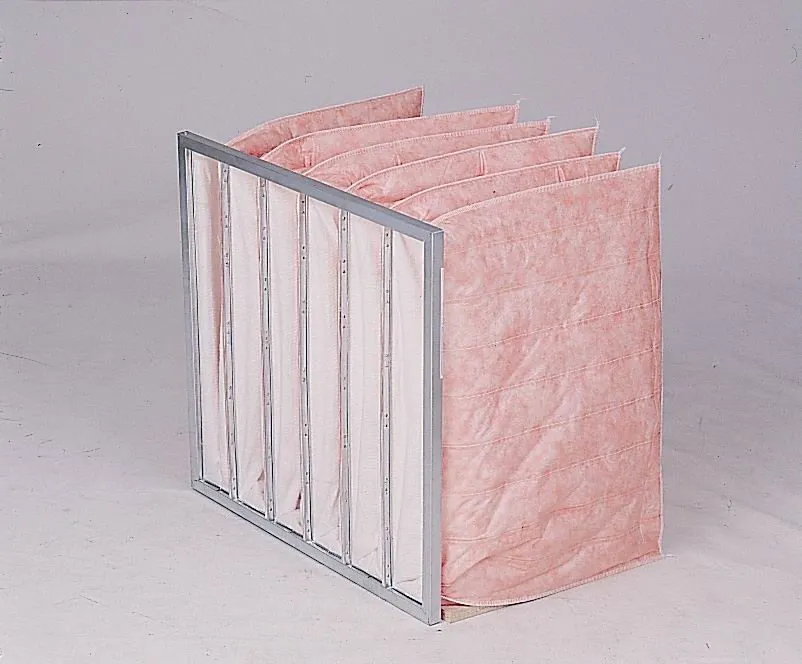
Glass fiber media in a multi-pocket configuration.
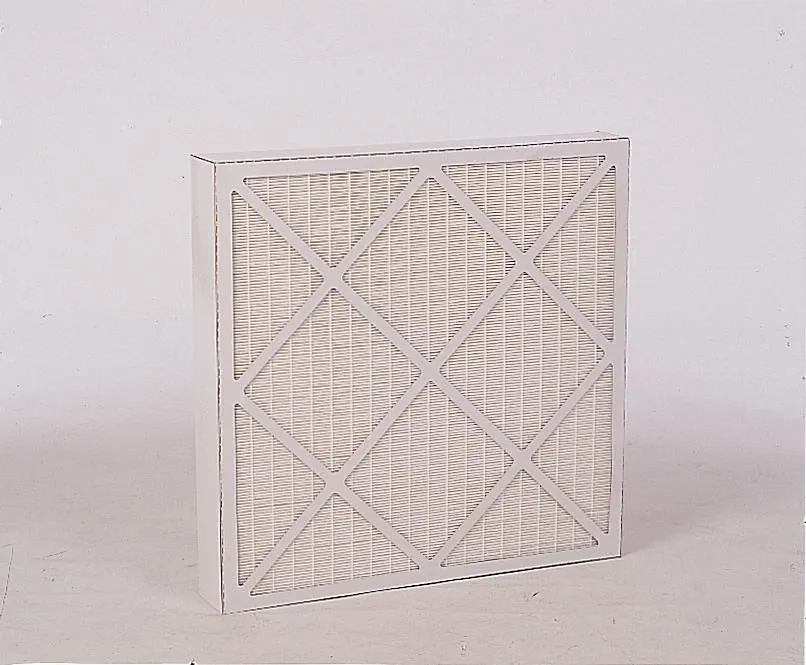
Panel-format intermediate air filtration.
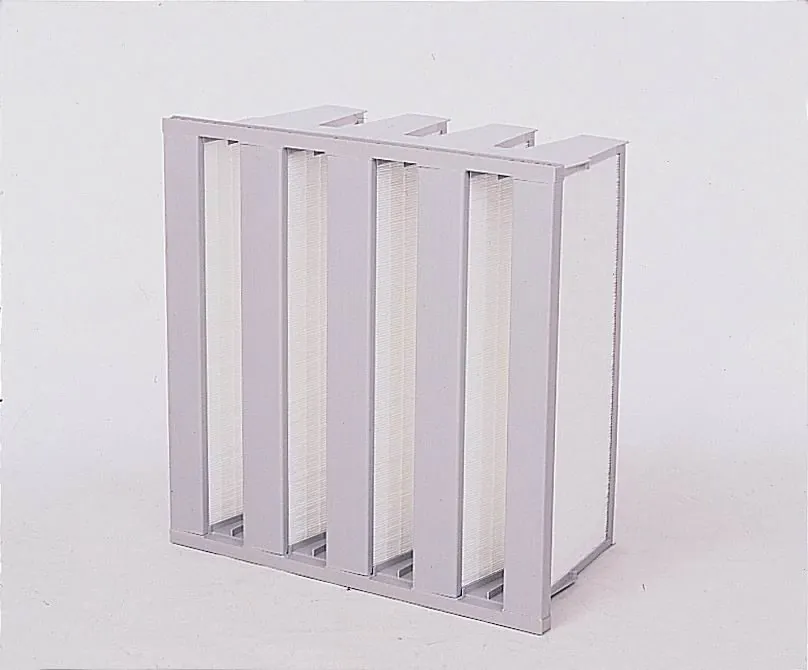
Compact V-bank design for higher airflow.