 YIDINGAIR FILTRATION
Product overview
What it is and where it fits.
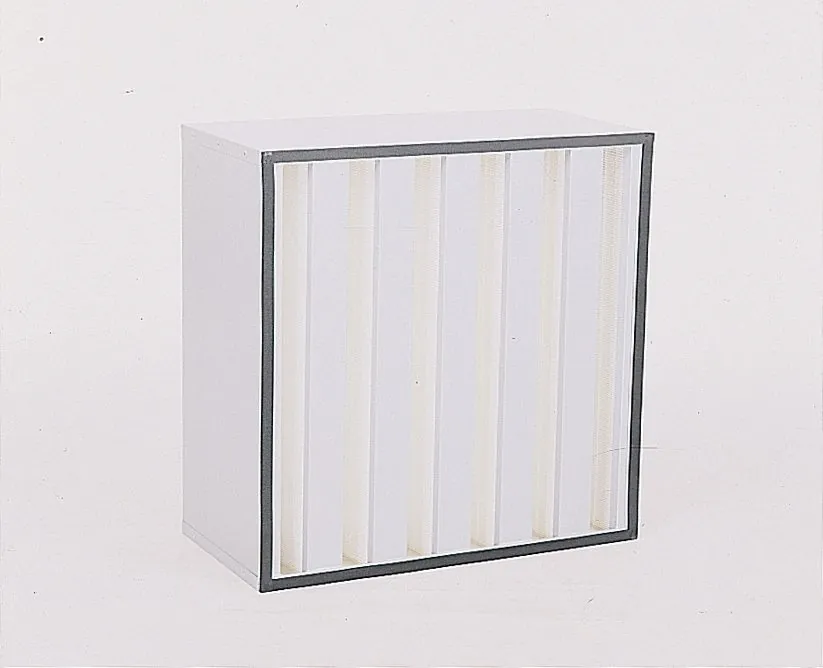
The AR202 is a multi-pocket bag filter with synthetic-fibre media for the medium-efficiency stage of air handling units. It protects coils and fans and extends the life of downstream HEPA filters.
Individual pockets are mounted in a corrosion-resistant metal frame and spaced so they inflate fully without touching each other. Sealed seams and frame joints reduce bypass. The catalogue lists 3-, 6- and 12-pocket versions in lengths from 381 mm to 914 mm.
- Filter type
- Multi-pocket bag filter, synthetic media
- Efficiency grades (ASHRAE 52.1 dust-spot)
- 40–45%, 60–65%, 80–85%, 90–95%
- MERV equivalent (catalogue)
- MERV 9, 11, 13, 14
- Face sizes
- 289 × 595 mm and 595 × 595 mm (12×24 and 24×24 in)
- Pocket lengths
- 381, 535, 762, 914 mm
- Pockets
- 3, 6 or 12
- Face velocity
- Up to 750 ft/min
- Max. continuous temperature
- 60 °C
Typical applications
- Medium-efficiency stage in air handling units
- Pre-filtration ahead of HEPA filters in cleanroom systems
- Hospitals, pharmaceutical facilities and offices
- Paint booths and industrial ventilation
Construction & performance
Design & applications
Individual synthetic-fiber pockets are mounted in a corrosion-resistant metal frame. The V-shaped pockets are spaced to inflate without contact; sealed seams and frame joints reduce bypass. Applications include hospitals, pharmaceutical facilities, paint booths and offices.
Efficiency options
Dust-spot grades 40–45%, 60–65%, 80–85% and 90–95% (ASHRAE 52.1), for face velocities up to 750 ft/min (3.8 m/s).
Media
This model uses synthetic fibre media. For glass-fibre pockets, see the Glass Fiber Pocket Filter.
Selection guide
How to choose.
Pick the grade for its job
As a pre-filter before HEPA, 80–85% or 90–95% dust-spot grades protect the final filter best; for general building ventilation, 60–65% is often sufficient. Follow your system design.
More pockets or longer pockets
More pockets and longer pockets add media area, which lowers pressure drop and increases dust-holding capacity — at the cost of housing depth. Check the depth available in your AHU.
Synthetic or glass fibre
Synthetic media tolerates humidity and handling well and sheds no glass fibres. For a mechanically stable efficiency throughout service life, compare with our glass-fibre pocket filter.
Technical data
Specifications & dimensions.
Rated airflow in m³/h, pressure drop in Pa, actual dimensions in mm, nominal sizes in inches. Swipe tables sideways on small screens.
| Dust-spot efficiency | Gravimetric efficiency | MERV |
|---|---|---|
| 90–95% | > 99% | 14 |
| 80–85% | > 98% | 13 |
| 60–65% | > 97% | 11 |
| 40–45% | > 96% | 9 |
| Test standard: ASHRAE 52.1-1992 / EN 779 | MERV: ASHRAE 52.2 | |
| Efficiency (%) | Nominal size (in) | Actual size (mm) | Pocket count | Rated airflow (m³/h) | Pressure drop (Pa) | ||
|---|---|---|---|---|---|---|---|
| Dust-spot efficiency | Gravimetric efficiency | Initial pressure drop | Final pressure drop | ||||
| 90–95 | > 99 | 12 × 24 × 15 | 289 × 595 × 381 | 3 | 1070 | 179 | 250 |
| 6 | 1700 | 159 | |||||
| 12 × 24 × 21 | 289 × 595 × 535 | 3 | 1700 | 147 | |||
| 6 | 2130 | 134 | |||||
| 12 × 24 × 30 | 289 × 595 × 762 | 3 | 2130 | 169 | |||
| 6 | 2130 | 92 | |||||
| 12 × 24 × 36 | 289 × 595 × 914 | 3 | 2130 | 149 | |||
| 6 | 2550 | 95 | |||||
| 24 × 24 × 15 | 595 × 595 × 381 | 6 | 2130 | 179 | |||
| 12 | 3400 | 129 | |||||
| 24 × 24 × 21 | 595 × 595 × 533 | 6 | 3400 | 147 | |||
| 12 | 4250 | 134 | |||||
| 24 × 24 × 30 | 595 × 595 × 762 | 6 | 4250 | 169 | |||
| 12 | 4250 | 92 | |||||
| 24 × 24 × 36 | 595 × 595 × 914 | 6 | 4250 | 149 | |||
| 12 | 4250 | 95 | |||||
| 80–85 | > 98 | 12 × 24 × 15 | 289 × 595 × 381 | 3 | 1275 | 174 | 250 |
| 6 | 1700 | 134 | |||||
| 12 × 24 × 21 | 289 × 595 × 535 | 3 | 1700 | 167 | |||
| 6 | 2130 | 117 | |||||
| 12 × 24 × 30 | 289 × 595 × 762 | 3 | 2130 | 144 | |||
| 6 | 2130 | 82 | |||||
| 12 × 24 × 36 | 289 × 595 × 914 | 3 | 2550 | 149 | |||
| 6 | 2550 | 87 | |||||
| 24 × 24 × 15 | 595 × 595 × 381 | 6 | 2550 | 174 | |||
| 12 | 3400 | 134 | |||||
| 24 × 24 × 21 | 595 × 595 × 533 | 6 | 3400 | 169 | |||
| 12 | 4250 | 117 | |||||
| 24 × 24 × 30 | 595 × 595 × 762 | 6 | 4250 | 144 | |||
| 12 | 4250 | 82 | |||||
| 24 × 24 × 36 | 595 × 595 × 914 | 6 | 5100 | 149 | |||
| 12 | 5100 | 87 | |||||
| 60–65 | > 97 | 12 × 24 × 15 | 289 × 595 × 381 | 3 | 1700 | 154 | 250 |
| 6 | 2130 | 112 | |||||
| 12 × 24 × 21 | 289 × 595 × 535 | 3 | 2130 | 137 | |||
| 6 | 2130 | 75 | |||||
| 12 × 24 × 30 | 289 × 595 × 762 | 3 | 2250 | 115 | |||
| 6 | 2250 | 67 | |||||
| 12 × 24 × 36 | 289 × 595 × 914 | 3 | 2250 | 105 | |||
| 6 | 2250 | 57 | |||||
| 24 × 24 × 15 | 595 × 595 × 381 | 6 | 3400 | 154 | |||
| 12 | 4250 | 112 | |||||
| 24 × 24 × 21 | 595 × 595 × 533 | 6 | 4250 | 137 | |||
| 12 | 4250 | 75 | |||||
| 24 × 24 × 30 | 595 × 595 × 762 | 6 | 5100 | 115 | |||
| 12 | 5100 | 67 | |||||
| 24 × 24 × 36 | 595 × 595 × 914 | 6 | 5100 | 105 | |||
| 12 | 5100 | 57 | |||||
| 45–50 | > 96 | 12 × 24 × 15 | 289 × 595 × 381 | 3 | 1700 | 82 | 250 |
| 12 × 24 × 21 | 289 × 595 × 535 | 3 | 2250 | 95 | |||
| 24 × 24 × 15 | 595 × 595 × 381 | 6 | 3400 | 80 | |||
| 24 × 24 × 21 | 595 × 595 × 533 | 6 | 5100 | 95 | |||
| Type | Specification | |||
|---|---|---|---|---|
| Construction | Filter media | Synthetic fiber | ||
| Frame material | Metal frame | |||
| Operating conditions | Maximum continuous temperature | ℃ | 60 | |
| Maximum relative humidity | %RH | 100 (non-condensing) | ||
Catalogue values at rated airflow. Test data for your exact configuration is available on request.
Original Yiding catalogue (Chinese) ↗FAQ
Common questions.
What is the difference between synthetic and glass-fibre pocket filters?+
Synthetic media is tough, tolerant of moisture and sheds no glass fibres. Glass-fibre media relies on mechanical capture and keeps a stable efficiency through its life. Many synthetic media also use an electrostatic charge that boosts initial efficiency but can decline in service, so choose by the minimum efficiency your system needs.
How does the dust-spot efficiency relate to MERV or ISO 16890?+
The catalogue grades are dust-spot efficiencies under ASHRAE 52.1 with MERV equivalents (90–95% ≈ MERV 14). ISO 16890 uses a different test method (ePM1, ePM2.5, ePM10), so there is no exact one-to-one conversion; ask us for the classification under the standard your specification uses.
When should a pocket filter be replaced?+
Replace it when it reaches the final pressure drop set for your system or the value recommended for the filter, or earlier if the media is damaged. Monitoring pressure drop with a differential pressure gauge is the usual method.
Can you make pocket filters to a custom size?+
Yes. Frame size, pocket number and pocket length can be built to your requirements.