 YIDINGAIR FILTRATION
Product overview
What it is and where it fits.
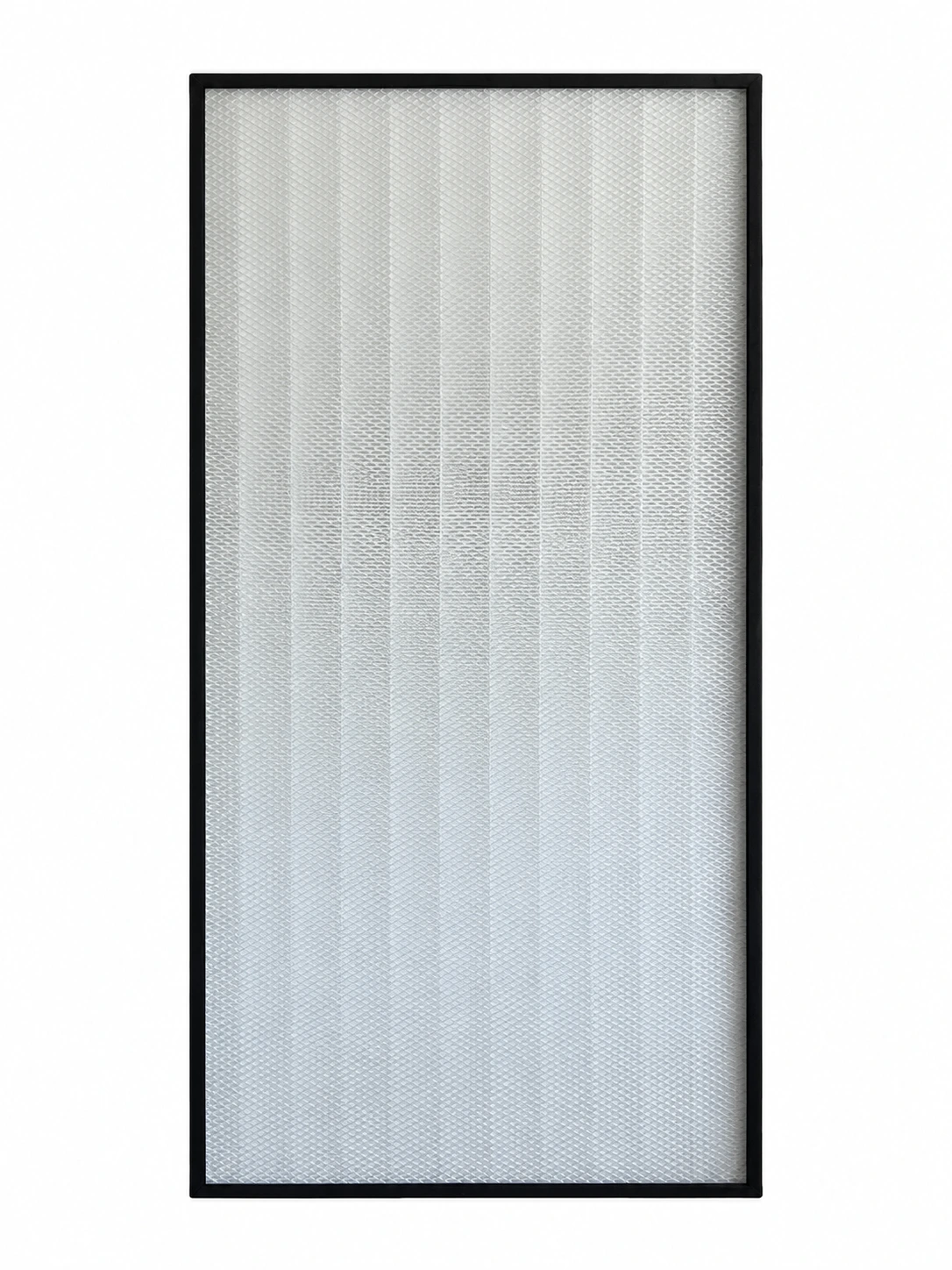
The AR302 is a low-profile mini-pleat HEPA / ULPA panel filter for the final stage of a cleanroom air system: ceiling grids and terminal housings, fan filter units, clean benches and aseptic workstations.
Micro-glass fibre media is pleated at close spacing and held by hot-melt adhesive beads instead of metal separators, so a panel only 50 or 70 mm deep carries a large media area. The pack is sealed into an anodised aluminium extrusion frame, with a neoprene gasket or gel channel to seal against your ceiling system.
- Filter type
- Mini-pleat HEPA / ULPA panel
- Listed efficiency grades
- 99.97%, 99.99%, 99.999995%, 99.99995%
- Pack depth
- 50 mm or 70 mm
- Standard modules
- 570 mm and 610 mm, from 24×24 in to 48×48 in
- Frame
- Anodised aluminium extrusion
- Sealing
- Dry seal (neoprene gasket) or gel seal
- Face guard
- None, upstream, downstream or both sides
- Max. continuous temperature
- 60 °C
Typical applications
- Terminal filters in cleanroom ceiling grids and room-side housings
- Fan filter units (FFU) and equipment filter units
- Clean benches, laminar-flow workstations and aseptic benches
- Semiconductor and electronics processes — low-boron media can be specified
- Pharmaceutical, laboratory and hospital clean areas
Construction & performance
Applications
A low-profile mini-pleat filter for cleanrooms, clean workstations, aseptic benches and fan filter units. Low-boron media can be specified for sensitive processes.
Construction
Micro-glass fiber media with hot-melt pleat spacing is sealed around the perimeter in an anodized aluminum extrusion frame. Dry- and gel-seal frame options are listed.
Efficiency & testing
HEPA grades up to 99.999% at 0.3 µm and ULPA grades up to 99.999999% at 0.1–0.2 µm. Each filter is individually tested to EN 1822, and its result is printed on the filter label.
Selection guide
How to choose.
Start from the ceiling or housing
Check how the filter will be sealed. Gasket (dry-seal) frames clamp against a flat flange or T-bar grid; gel-seal frames sit on a knife edge and are common where leak-tightness is critical. Tell us the grid or housing type and we match the frame profile.
Nominal vs actual size
The catalogue lists two module families: 570 mm actual (for 24 in nominal grids built to metric modules) and 610 mm actual (true 24 in). Measure the opening and send the actual dimensions, not only the nominal size.
Choose the depth for your airflow
In the catalogue table a 24×24 in panel is rated at 400 m³/h in 50 mm depth and 450 m³/h in 70 mm depth. The deeper pack carries more media and suits higher airflow; the thinner pack saves ceiling height.
Specify efficiency and test method together
Name the grade your cleanroom design calls for and the test standard you need the report to follow, so the filter and its documentation match your validation.
Technical data
Specifications & dimensions.
Rated airflow in m³/h, pressure drop in Pa, actual dimensions in mm, nominal sizes in inches. Swipe tables sideways on small screens.
| Particle size | Efficiency |
|---|---|
| 0.3 µm | 95% |
| 99.97% | |
| 99.99% | |
| 99.999% | |
| 0.1–0.2 µm | ≥ 99.999% |
| Test standard: EN 1822 | |
| Efficiency (%) | Nominal size (in) | Actual size (mm) | Rated airflow (m³/h) | Pressure drop (Pa) |
|---|---|---|---|---|
| 99.97 / 99.99 | 24 × 24 × 2 | 570 × 570 × 50 | 400 | 87 |
| 610 × 610 × 50 | 75 | |||
| 24 × 24 × 3 | 570 × 570 × 70 | 450 | 99 | |
| 610 × 610 × 70 | 85 | |||
| 24 × 48 × 2 | 570 × 1170 × 50 | 800 | 82 | |
| 610 × 1220 × 50 | 75 | |||
| 24 × 48 × 3 | 570 × 1170 × 70 | 900 | 93 | |
| 610 × 1220 × 70 | 82 | |||
| 48 × 48 × 2 | 1170 × 1170 × 50 | 1800 | 81 | |
| 1220 × 1220 × 50 | 88 | |||
| 48 × 48 × 3 | 1170 × 1170 × 70 | 2000 | 97 | |
| 1220 × 1220 × 70 | 89 | |||
| 99.999995 | 24 × 24 × 2 | 570 × 570 × 50 | 400 | 91 |
| 610 × 610 × 50 | 79 | |||
| 24 × 24 × 3 | 570 × 570 × 70 | 450 | 103 | |
| 610 × 610 × 70 | 89 | |||
| 24 × 48 × 2 | 570 × 1170 × 50 | 800 | 86 | |
| 610 × 1220 × 50 | 79 | |||
| 24 × 48 × 3 | 570 × 1170 × 70 | 900 | 97 | |
| 610 × 1220 × 70 | 86 | |||
| 48 × 48 × 2 | 1170 × 1170 × 50 | 1800 | 92 | |
| 1220 × 1220 × 50 | 85 | |||
| 48 × 48 × 3 | 1170 × 1170 × 70 | 2000 | 101 | |
| 1220 × 1220 × 70 | 93 | |||
| 99.99995 | 24 × 24 × 2 | 570 × 570 × 50 | 400 | 97 |
| 610 × 610 × 50 | 83 | |||
| 24 × 24 × 3 | 570 × 570 × 70 | 450 | 109 | |
| 610 × 610 × 70 | 97 | |||
| 24 × 48 × 2 | 570 × 1170 × 50 | 800 | 91 | |
| 610 × 1220 × 50 | 81 | |||
| 24 × 48 × 3 | 570 × 1170 × 70 | 900 | 103 | |
| 610 × 1220 × 70 | 92 | |||
| 48 × 48 × 2 | 1170 × 1170 × 50 | 1800 | 98 | |
| 1220 × 1220 × 50 | 90 | |||
| 48 × 48 × 3 | 1170 × 1170 × 70 | 2000 | 109 | |
| 1220 × 1220 × 70 | 100 |
| Type | Specification | |||||
|---|---|---|---|---|---|---|
| Construction | Filter media | Micro-glass fiber paper | ||||
| Support material | Hot-melt adhesive | |||||
| Sealant | PU BASE | |||||
| Gasket material | Neoprene rubber | |||||
| Gasket position | None | Upstream | Downstream | Both sides | ||
| Frame type | Dry seal | Gel seal | ||||
| Frame material | Anodized aluminum frame | |||||
| Protective mesh material | Painted expanded mesh | Anodized expanded mesh | ||||
| Protective mesh position | None | Upstream | Downstream | Both sides | ||
| Operating conditions | Maximum continuous temperature | ℃ | 60 | |||
| Maximum relative humidity | %RH | 100 (non-condensing) | ||||
Catalogue values at rated airflow. Test data for your exact configuration is available on request.
Original Yiding catalogue (Chinese) ↗FAQ
Common questions.
What is the difference between HEPA and ULPA filters?+
Both use micro-glass fibre media. In the widely used US definition a HEPA filter captures at least 99.97% of 0.3 µm particles. Under EN 1822, HEPA classes H13 and H14 require at least 99.95% and 99.995% at the most penetrating particle size (MPPS), while ULPA classes start at U15 with at least 99.9995%. ULPA filters are used where the cleanliness requirement is stricter than HEPA can reliably deliver.
How is a mini-pleat HEPA filter different from a separator HEPA filter?+
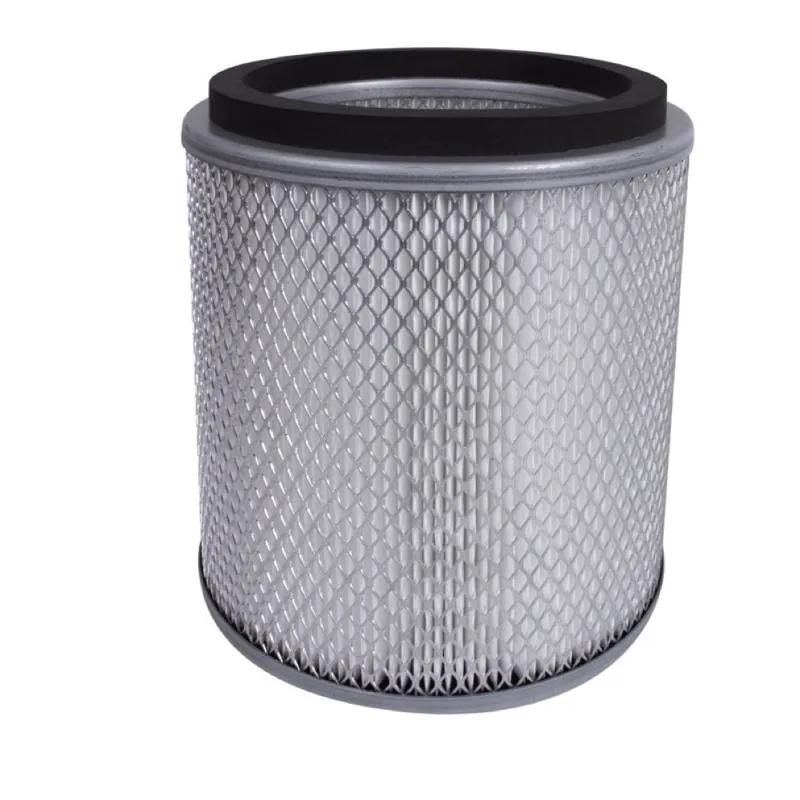
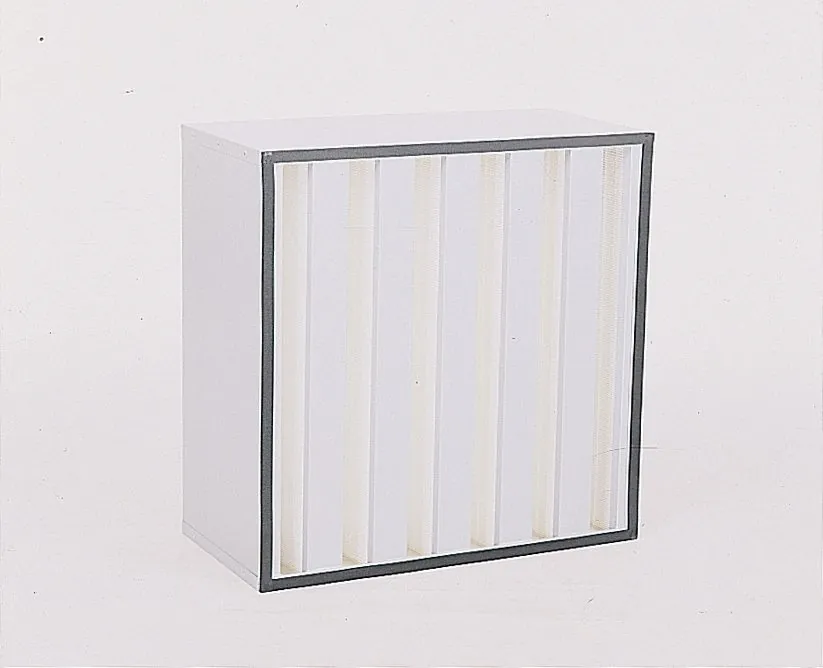
A mini-pleat filter keeps its pleats apart with hot-melt adhesive beads, so the pack is shallow (here 50–70 mm) and light — ideal for ceilings, FFUs and benches. A separator filter uses corrugated aluminium separators between deep pleats (150–292 mm), which suits air handling units, ducts and higher-temperature service. See our separator-type HEPA filter for that format.
Can the AR302 be used in a fan filter unit?+
Yes. Mini-pleat panels of this type are the standard filter element in fan filter units, including our AR603 FFU, whose filter sizes are listed on the FFU page.
Should I choose a gasket or a gel-seal frame?+
Follow your ceiling system. Gasket frames are simpler and suit clamped housings and T-bar grids. Gel-seal frames press a knife edge into a gel channel and are chosen where the ceiling is designed for gel sealing and bypass leakage must be minimised.
Do you make non-standard sizes?+
Yes. Besides the listed 570 mm and 610 mm modules, frame dimensions, depth, sealing and guard options can be built to your drawing.