 YIDINGAIR FILTRATION
Get a quote↗
YIDINGAIR FILTRATION
Technical Guides
2026-09-27
What ISO 5, 6, 7 and 8 mean in particles per cubic metre, and how the filtration train — prefilter, medium-efficiency filter and HEPA — is built for each class.
Key points
| Class | ≥ 0.5 µm | ≥ 1 µm | ≥ 5 µm | Former US FED-STD-209E |
|---|---|---|---|---|
| ISO 5 | 3,520 | 832 | — | Class 100 |
| ISO 6 | 35,200 | 8,320 | 293 | Class 1,000 |
| ISO 7 | 352,000 | 83,200 | 2,930 | Class 10,000 |
| ISO 8 | 3,520,000 | 832,000 | 29,300 | Class 100,000 |
Classes are determined by particle counts at the chosen occupancy state (as-built, at-rest or operational).
No single filter produces a cleanroom. Air passes through stages, each protecting the next:
| Class | Terminal filters | Typical arrangement |
|---|---|---|
| ISO 8 | HEPA (often H13) | Ducted terminal modules, partial ceiling coverage |
| ISO 7 | HEPA (H13/H14) | Terminal modules or FFUs, higher air changes |
| ISO 6 | HEPA (H14) | FFUs or terminal modules, larger coverage |
| ISO 5 | HEPA H14 or ULPA | Unidirectional flow, FFU ceiling or clean bench / booth |
A local ISO 5 zone is often created with a clean workstation or clean booth inside an ISO 7 room instead of making the whole room ISO 5.
Approximately. FED-STD-209E was withdrawn in 2001; ISO 7 is the equivalent ISO 14644-1 class for particles ≥ 0.5 µm.
Yes. Clean workstations, clean booths or a local FFU canopy create ISO 5 zones inside a less clean room.
H13 is common; H14 is used where the design or customer requires it. See our guide to H13 vs H14.
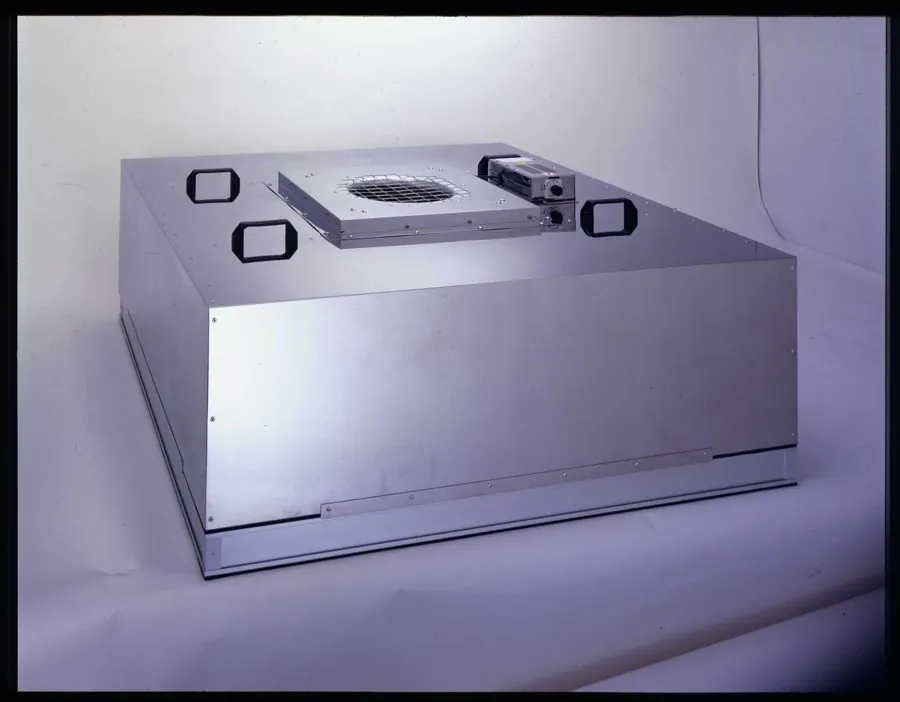
Integrated airflow and filtration for cleanrooms.
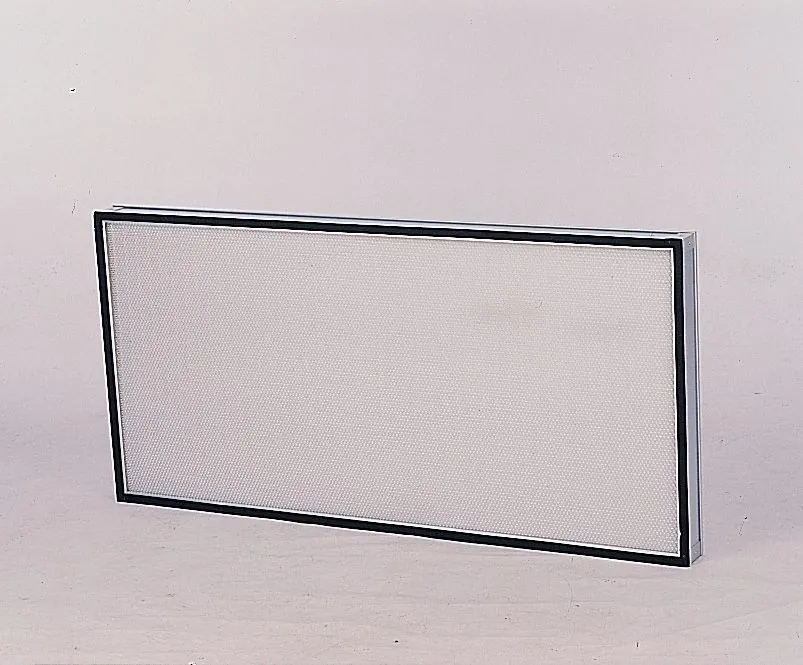
Low-profile filtration for critical clean environments.
Transfer materials between controlled spaces.
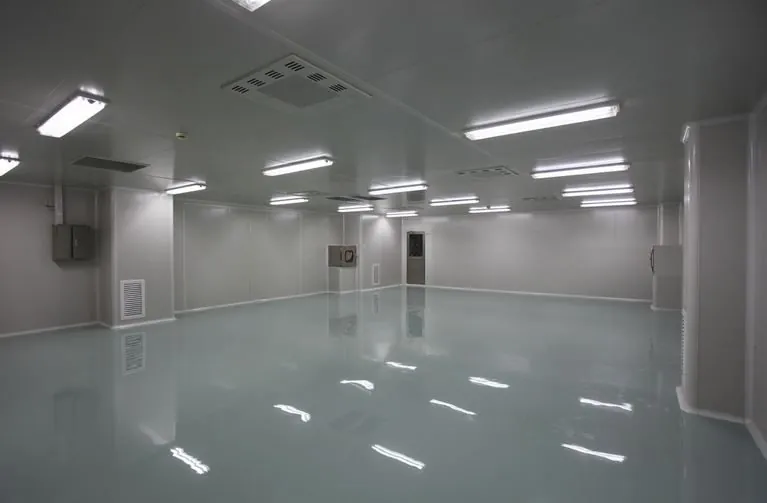
Localized vertical airflow for a cleaner work area.