 YIDINGAIR FILTRATION
Get a quote↗
YIDINGAIR FILTRATION
Technical Guides
2026-09-27
The number of FFUs follows from the cleanroom class, room size and required air changes or downflow velocity. A worked example and typical design ranges.
Key points
For ISO 6–8 rooms with mixed (non-unidirectional) airflow, designers work from air changes per hour (ACH). For ISO 5 and cleaner rooms with unidirectional flow, they work from a downflow velocity across the filtered ceiling area, commonly around 0.3–0.5 m/s at the filter face.
| ISO 14644-1 class | Airflow basis | Typical ceiling coverage with filters |
|---|---|---|
| ISO 5 | Unidirectional, ~0.3–0.5 m/s | Large share to full ceiling |
| ISO 6 | ~150–240 ACH | ~25–40% |
| ISO 7 | ~60–90 ACH | ~15–25% |
| ISO 8 | ~10–30 ACH | ~5–15% |
Actual requirements depend on the process, people, equipment and contamination sources. The room is qualified by particle counts, not by air changes.
A room 10 m × 6 m × 3 m high has a volume of 180 m³. For ISO 7 at 60 ACH, the supply airflow is 180 × 60 = 10,800 m³/h.
A 2 × 4 ft FFU (filter about 0.57 × 1.17 m) running at 0.45 m/s face velocity delivers roughly 0.57 × 1.17 × 0.45 × 3,600 ≈ 1,080 m³/h. The room therefore needs about 10,800 ÷ 1,080 = 10 units, before adding a margin for filter loading and for the doors and equipment in your layout.
It depends on size and fan speed. A 2 × 4 ft unit at about 0.45 m/s face velocity delivers roughly 1,000 m³/h; check the rated airflow of the specific unit.
Usually not. FFUs recirculate and filter room air; an AHU still supplies conditioned fresh air for temperature, humidity and pressurisation.
HEPA covers most cleanroom classes. ULPA is used for the most critical semiconductor and research zones.
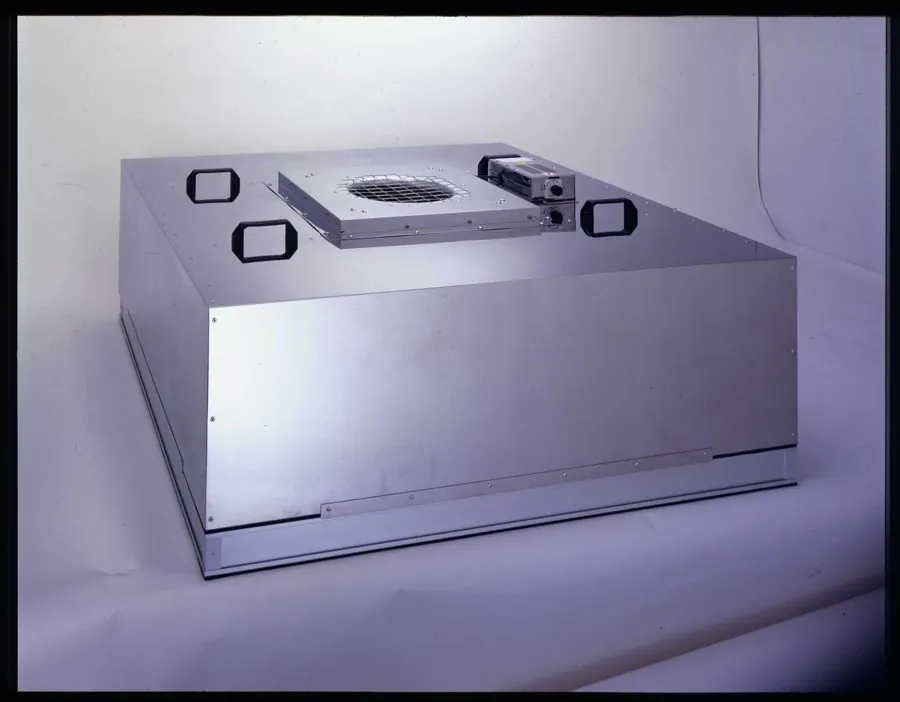
Integrated airflow and filtration for cleanrooms.
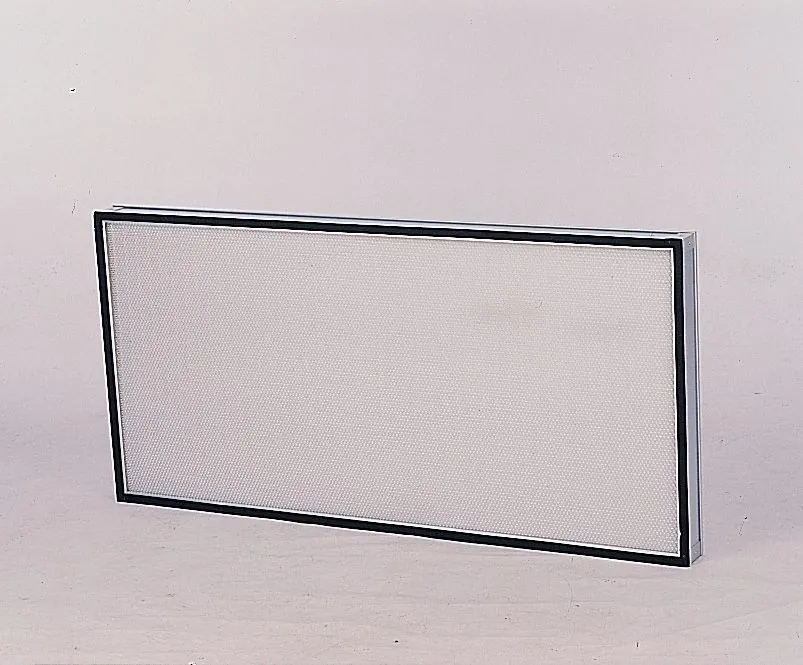
Low-profile filtration for critical clean environments.
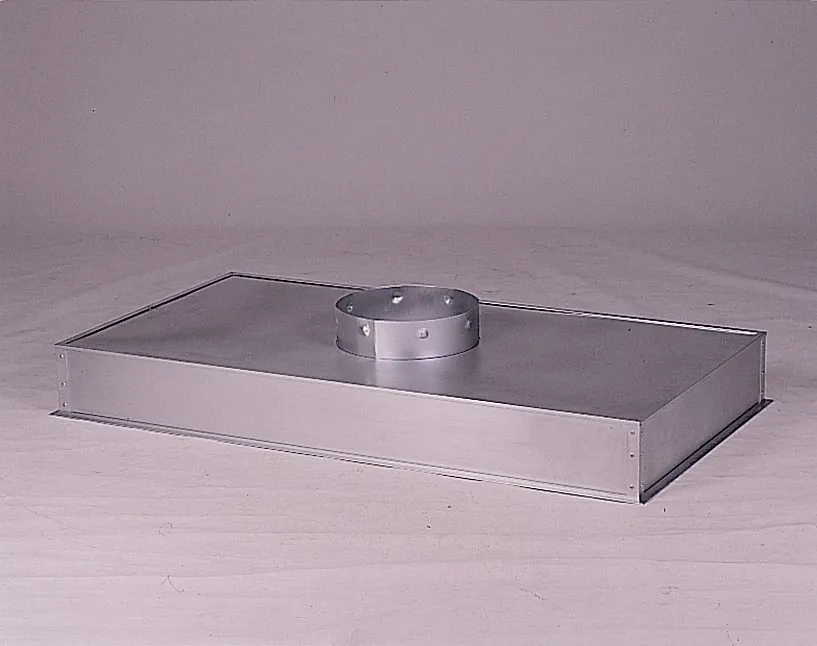
A ceiling filter housing with room-side access.
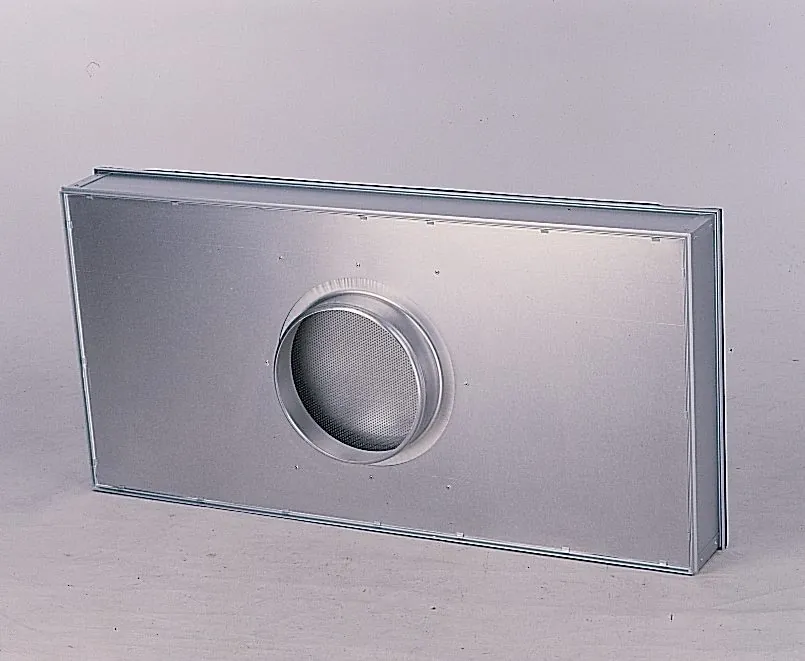
An integrated terminal filter and duct connection.