 YIDINGAIR FILTRATION
Get a quote↗
YIDINGAIR FILTRATION
Technical Guides
2026-11-04
A practical guide to AR208 coastal intake filtration: how the two-layer glass-fibre construction is described, how to read airflow and pressure-drop data, and what evidence to request for humid, salt-laden air.
Key points
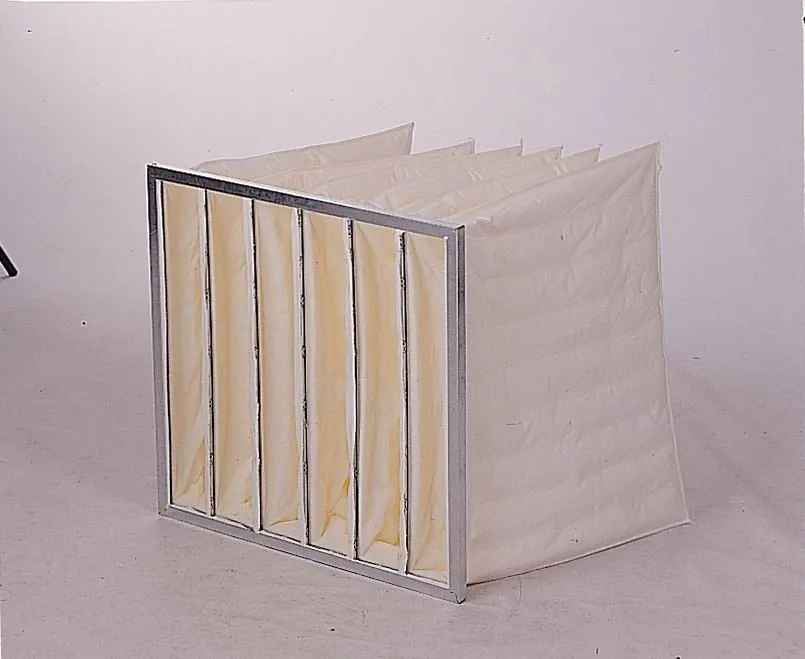
Yiding describes AR208 as an intake-air filter for coastal environments, using coarse and fine water-repellent glass-fibre layers. The catalogue offers 150 mm and 292 mm depths, standard- and high-airflow configurations, and several metal frame options. These are product-family descriptions; the approved quotation and configuration-specific data define what is supplied. [1]
The aim is to reduce airborne salt-bearing particulate contamination entering a compatible ventilation system. A salt-mist filter does not remove every contaminant or establish the cleanliness of a room by itself. Where corrosive gases are also present, assess gas-phase treatment separately; particle and gas filtration address different contaminants. [5]
Coastal intake air can contain salt-bearing droplets and dried particles. Humidity changes their physical condition and how a filter system must handle them. Deposited salts can contribute to corrosion where moisture and susceptible materials are present. Exposure depends on the site and weather; distance from the shoreline alone is not an acceptance criterion. [2]
For selection, record actual wetting, wind-driven rain, fog, visible deposits and intake orientation. Avoid treating one relative-humidity threshold as a universal boundary between safe and unsafe operation. An intake survey provides a more useful starting point than a generic claim of coastal suitability.
In the published AR208 construction, coarse and fine glass-fibre layers divide the filtration task across the media. Water-repellent describes a media characteristic; it does not by itself establish an assembled filter’s drainage capacity, wet efficiency, or resistance to salt carry-over. Those properties need relevant evidence for the selected configuration. [1]
Do not infer a particular life extension, zero salt breakthrough, or corrosion-free equipment from the two-layer arrangement. Ask for the test aerosol, humidity, airflow, loading procedure and acceptance criterion when a project needs a quantified salt-removal claim.
The following values reproduce the published Yiding catalogue configurations. Initial pressure drop must be read with its associated airflow. Final pressure drop is a catalogue reference for replacement planning, not permission to exceed the fan or housing limit. Confirm the ordered configuration before purchase. [1]
| Dimensions (mm) | Rated airflow (m³/h) | Initial Δp (Pa) | Final Δp reference (Pa) |
|---|---|---|---|
| 305 × 610 × 150 | 850 | 117 | 300 |
| 610 × 610 × 150 | 1700 | 117 | 300 |
| 305 × 610 × 292 | 1700 | 167 | 350 |
| 610 × 610 × 292 | 3400 | 167 | 350 |
| 305 × 610 × 292* | 2125 | 174 | 350 |
| 610 × 610 × 292* | 4250 | 174 | 350 |
* High-airflow configuration. Other rows are standard-airflow configurations. Catalogue references are not a salt-aerosol test report or a guarantee of site performance.
For an engineering screening calculation, gross face velocity v = Q ÷ (3600 × A), where Q is airflow in m³/h and A is external face area in m². For a 610 × 610 mm face, A = 0.3721 m². At 3400 m³/h, v is approximately 2.54 m/s; at 4250 m³/h it is approximately 3.17 m/s. These are calculated values, not measured AR208 results.
External face area is different from effective open area and total pleated media area. Confirm the pressure-drop curve and fan operating point rather than extrapolating linearly from a single catalogue point. Changing to a higher-airflow version does not automatically make an existing fan deliver more air.
The AR208 catalogue lists historical dust-spot data and MERV terminology. Do not convert these directly to an ISO ePM class or label them “95% salt removal.” ISO 16890 classifies general-ventilation particulate filters; its results alone do not predict service efficiency and lifetime. [1, 3]
ISO 9227 concerns corrosion testing of materials and coatings. A reference to this standard is not evidence that AR208 has been tested or certified to it. The standard also cautions against using the test to predict long-term corrosion resistance. [4]
| Evidence | What it addresses | What it does not prove |
|---|---|---|
| Particle efficiency classification | Particle capture under a stated test method and airflow | A universal percentage for wet sea-salt removal |
| Salt-aerosol performance test | Specified aerosol, humidity, loading and carry-over conditions | Performance at all sites and throughout any service life |
| ISO 9227 salt spray test | Corrosion resistance of a specified material/coating specimen | Filter salt-removal efficiency or a forecast of service life |
Record clean-filter pressure drop at the normal operating airflow. Trend differential pressure alongside airflow and inspect gaskets, media, frame and drainage after significant wet-weather exposure. A pressure rise can indicate loading or wetting; an unexpectedly low reading can also warrant checking airflow, instrument connections or bypass. Diagnose the cause rather than relying on a pressure reading alone.
Use the agreed replacement limit and equipment requirements. Replace earlier if media, seals or the frame are damaged or contamination is carrying downstream. Do not wash or blow-clean this glass-fibre configuration unless Yiding has provided a written procedure for that specific filter. A fixed replacement interval or guaranteed lifespan cannot be inferred from the model name.
Send the required dimensions, quantity, airflow, allowed pressure drop, installation drawing, frame and gasket requirements, and a short description of the coastal exposure. Include the existing filter label and any test or acceptance requirements. Yiding can discuss dimensions, frame materials and media configurations against the application.
This guide combines general filtration principles with published catalogue references. Configuration-specific performance, suitability and acceptance criteria should be recorded in the quotation and technical documentation; the article does not assert third-party approval or guarantee a corrosion outcome.
Do not treat it as HEPA on the basis of the AR208 name or salt-mist description. Use the specified efficiency classification and supporting test documentation for the ordered filter.
No. Capturing salt-bearing particles is different from removing water vapour. Moisture control and drainage need separate consideration.
No. The test contaminant, particle sizes, humidity, airflow and method must be specified before a salt-removal percentage can be stated.
No. ISO 9227 addresses corrosion testing of materials and coatings; it is not a salt-aerosol filter efficiency classification.
No such guarantee follows from selecting a filter. Exposure, water ingress, materials, maintenance and other contamination sources also affect corrosion.