 YIDINGAIR FILTRATION
Product overview
What it is and where it fits.
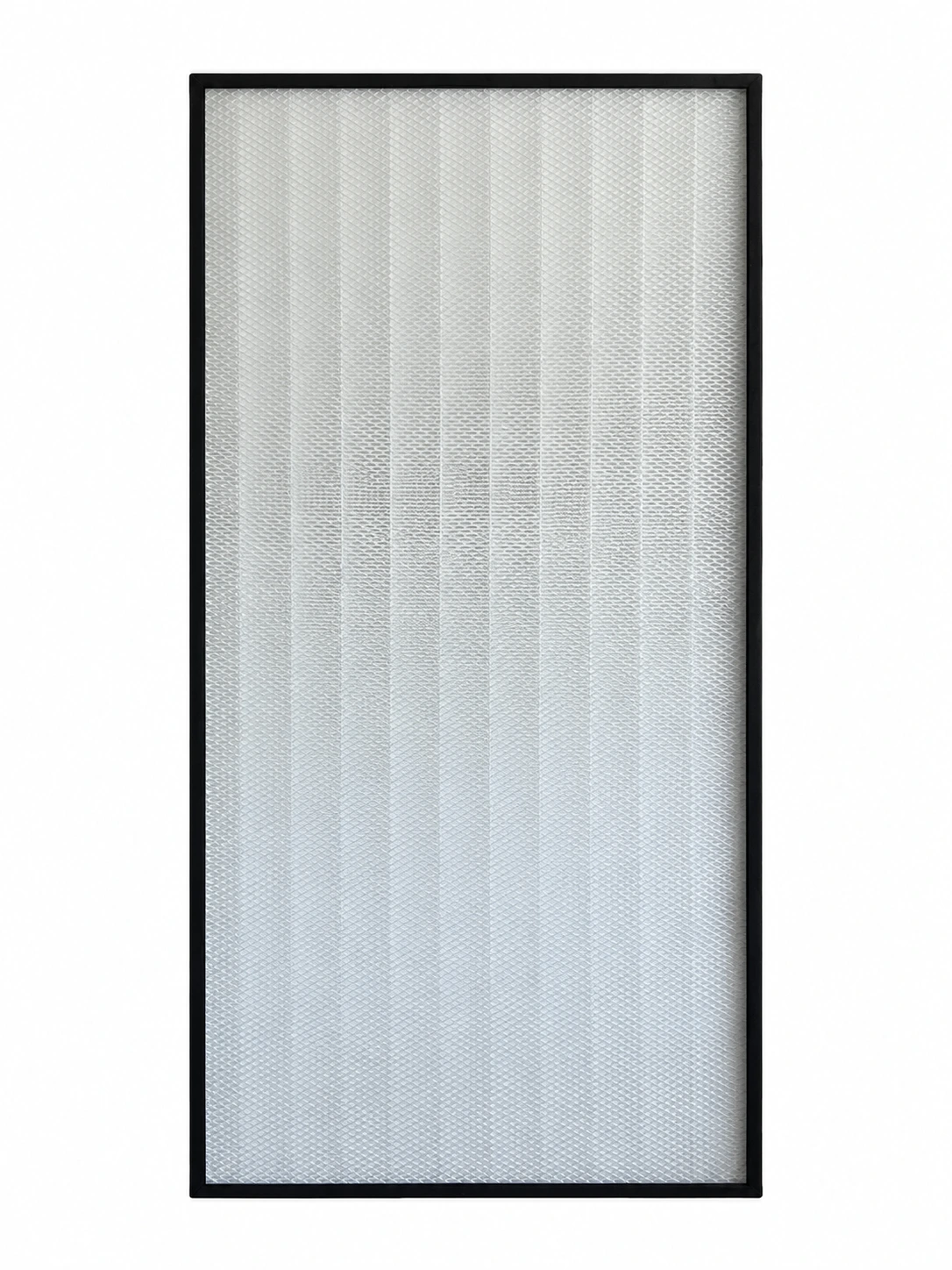
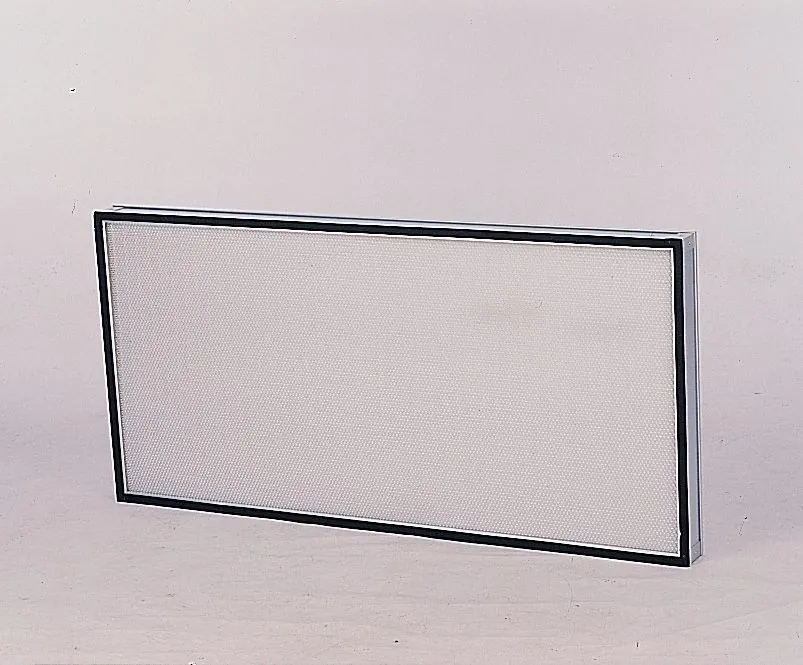
The AR208 salt-mist filter protects buildings and equipment near the coast from airborne sea salt. Two layers of water-repellent glass fibre — coarse and fine — share the collection load for salt particles in the 0.5–30 µm range described in the catalogue.
It is used at the air intakes of coastal factories, hotels, power facilities and precision processes such as semiconductor manufacturing, where salt deposits cause corrosion and contamination. Standard- and high-airflow versions are listed in 150 mm and 292 mm depths.
- Filter type
- Salt-mist (sea-salt aerosol) filter
- Media
- Two-layer water-repellent glass fibre
- Target particles (catalogue)
- Salt aerosol 0.5–30 µm
- Dust-spot efficiency
- 95% (MERV 14 in catalogue)
- Depths
- 150 mm and 292 mm
- Series
- Standard and high airflow
- Frames
- Galvanised steel, aluminium, stainless steel
Typical applications
- Air intakes of coastal factories and power facilities
- Coastal hotels and commercial buildings
- Semiconductor and precision manufacturing near the sea
- Protecting HVAC coils and electronics from salt corrosion
Construction & performance
Coastal air filtration
Designed for air intakes in coastal buildings and factories exposed to sea-salt aerosol. The catalogue describes salt particles over a 0.5–30 μm range.
Construction
Coarse and fine water-repellent glass fiber layers share the collection load. Galvanized steel, aluminum or stainless steel frames are available.
Applications & efficiency
Applications include coastal factories, hotels, power facilities, semiconductor manufacturing and precision processes. Catalogue dust-spot efficiency is 95%; standard- and high-airflow configurations are listed below.
Selection guide
How to choose.
Frame material near the sea
Stainless steel or aluminium frames resist salt corrosion better than galvanised steel.
Standard or high airflow
For a 610×610×292 mm filter the catalogue lists 3,400 m³/h (standard) and 4,250 m³/h (high airflow).
Technical data
Specifications & dimensions.
Rated airflow in m³/h, pressure drop in Pa, actual dimensions in mm, nominal sizes in inches. Swipe tables sideways on small screens.
| Dust-spot efficiency | Gravimetric efficiency | MERV |
|---|---|---|
| 90–95% | > 99% | 14 |
| Test standard: ASHRAE 52.1-1992 / EN 779 | MERV: ASHRAE 52.2 | |
| Efficiency (%) | Nominal size (in) | Actual size (mm) | Rated airflow (m³/h) | Pressure drop (Pa) | ||
|---|---|---|---|---|---|---|
| Dust-spot efficiency | Gravimetric efficiency | Initial pressure drop | Final pressure drop | |||
| Standard airflow | ||||||
| 95 | > 99 | 12 × 24 × 6 | 305 × 610 × 150 | 850 | 117 | 300 |
| 24 × 24 × 6 | 610 × 610 × 150 | 1700 | ||||
| 12 × 24 × 12 | 305 × 610 × 292 | 1700 | 167 | 350 | ||
| 24 × 24 × 12 | 610 × 610 × 292 | 3400 | ||||
| High airflow | ||||||
| 95 | > 99 | 12 × 24 × 12 | 305 × 610 × 292 | 2125 | 174 | 350 |
| 24 × 24 × 12 | 610 × 610 × 292 | 4250 | ||||
| Type | Specification | ||||
|---|---|---|---|---|---|
| Construction | Filter media | Micro-glass fiber paper | |||
| Support material | Corrugated separator | ||||
| Sealant | PU BASE | ||||
| Gasket material | Neoprene rubber | ||||
| Frame material | Metal frame | ||||
| Frame type | Box type | Single flange | |||
| Operating conditions | Maximum continuous temperature | ℃ | 60 | ||
| Maximum relative humidity | %RH | 100 (non-condensing) | |||
Catalogue values at rated airflow. Test data for your exact configuration is available on request.
Original Yiding catalogue (Chinese) ↗FAQ
Common questions.
Why do coastal buildings need salt filters?+
Sea-salt aerosol is hygroscopic and corrosive. Deposits on coils, electronics and products cause corrosion and contamination; a salt-mist filter at the intake removes it before it enters the building.
Why is the media water-repellent?+
Salt particles absorb moisture in humid coastal air. Water-repellent glass fibre keeps its structure and efficiency when the air is damp.