 YIDINGAIR FILTRATION
Get a quote↗
YIDINGAIR FILTRATION
Technical Guides
2026-11-13
Factory classification and installed leak testing answer different engineering questions. This analysis explains the evidence chain, a bypass-flow model and the documents buyers need for acceptance.
Key points
A factory efficiency report characterizes a filter under a defined test method and operating condition. An installed-system leak test investigates the filter after it has become part of a housing, seal and support assembly. The documents complement one another; neither automatically replaces the other. A purchasing specification should therefore identify both the supplied component and the acceptance boundary of the completed installation.
This technical review separates classification, local integrity and operational evidence. It also develops a simple mass-balance example to show why bypass deserves attention even when media penetration is low. The example is an analytical illustration, not a Yiding test result or a predicted failure rate. The intended outcome is a clearer conversation between the buyer, filter manufacturer, installation contractor and commissioning team.
EN 1822 and ISO 29463 provide frameworks for high-efficiency filter classification and testing. The relevant edition, class, test method and test airflow belong together. MPPS means most penetrating particle size; it is a test-related condition rather than a universal nominal pore size. Manufacturer guidance describes factory testing in this classification context. [1]
For document review, start with the object identified on the report. Does its model and unique identification match the delivered unit? Is the stated result an overall efficiency, a local integrity result, or both? Is the airflow stated in m³/h, and can the reported pressure drop in Pa be associated with that flow? A generic catalogue sheet may be useful for selection, but it cannot identify the condition of a particular unit after transport. A report also needs a clear date and responsible issuing organization so that questions can be traced to the correct record.
ISO 14644-3:2019 provides cleanroom performance test methods for different airflow arrangements and occupancy states. Its scope is broader than a filter efficiency certificate, and it cautions that alternative methods do not necessarily give equivalent measurements. [2] IEST-RP-CC034.5 covers HEPA and ULPA leak testing at production, before installation and after installation, including challenge-aerosol uniformity. [3]
The practical distinction is the boundary being investigated. A sound filter can be mounted against a damaged contact surface; a correct seal can surround media damaged during handling. Neither situation is resolved merely by reading a high efficiency percentage on an earlier document. Record the installation location, housing identity, filter identity and relevant operating state together. This connects a field result to the actual assembly instead of leaving an isolated pass/fail entry with no physical reference.
Consider a simplified, steady-flow mass balance. Let b be the fraction of total airflow passing through an unfiltered bypass, and P_f the fractional penetration through the filter. Assume both paths receive the same upstream particle concentration, the bypass removes no particles, and their downstream flows mix completely. Then total penetration is P_total = b + (1 − b) × P_f. This expression describes an overall concentration ratio; it is not the reading of a scanning probe.
Take an illustrative P_f = 0.00005, equivalent to 99.995% efficiency under the assumed conditions. With b = 0.001, or 0.1% bypass flow, P_total = 0.00104995. Overall penetration is therefore 0.104995%, about 21 times the no-bypass value; overall efficiency is 99.895005%. These numbers show a sensitivity, not an installation acceptance limit. The bypass fraction is a share of airflow, not a share of visible gap area. Real leakage depends on pressure differences and path resistance, so this equation cannot calculate leakage from a photograph or gasket width.
A local downstream probe samples a limited region, while an overall efficiency measurement represents a different sampling boundary. Instrument response, aerosol properties, background concentration and the chosen procedure affect interpretation. FDA guidance for aseptic pharmaceutical processing explicitly distinguishes efficiency testing from leak testing and discusses scanning the filter, frame and sealing region. [4]
A numerical limit from one procedure should not be transferred to another merely because both results use a percent sign. In particular, an installed photometer reading should not be used to assign an EN 1822 class by subtraction from 100. Establish the applicable method and its acceptance basis first. For a procurement comparison, ask whether two reports address the same object, particle or aerosol basis, airflow and measurement type. When any of those differ, a side-by-side percentage comparison is incomplete.
The following matrix is a recommended way to organize project evidence, not a claim that every listed item is prescribed identically by every standard. It separates supply information from site acceptance and makes document ownership easier to discuss. A buyer can use the final column as a review prompt before releasing a purchase order or accepting delivery.
| Record | Primary purpose | Review question |
|---|---|---|
| Approved specification and drawing | Define the ordered configuration | Are dimensions, class, airflow and seal interface explicit? |
| Unit-specific factory report | Identify the tested filter and method | Does the identification match the delivered unit? |
| Installation record | Connect the unit to its housing and location | Can this filter be traced to this installation? |
| Installed-system test report | Document the agreed field integrity checks | Are method, conditions, criteria and result recorded? |
| Operational qualification records | Assess the wider cleanroom duty | Are airflow and room requirements addressed separately? |
A useful procurement decision includes how the assembly will be inspected after mounting. The project team should address access to the downstream face and perimeter, an appropriate upstream challenge and sampling arrangement, and compatibility of the selected aerosol with the process. IEST identifies challenge uniformity as part of its leak-test practice. [3] For aseptic drug manufacturing, FDA also discusses the suitability of the aerosol and the need for documented scanning. [4]
As an engineering workflow, allocate responsibility for each handover: the supplier identifies the filter; the installer records its location and mounting; the commissioning team records the agreed checks; and the owner retains the acceptance file. If a unit is changed, the record should change with it. Any repair or corrective action should remain visible in that history rather than being hidden behind an earlier passing result. This organizational discipline is particularly useful when several visually identical filters serve different rooms.
A passing integrity result answers a defined integrity question at the time and conditions of the test. It does not, on its own, establish room particle classification, process suitability or long-term performance. Air distribution, room sources and operating practices still matter. FDA describes airflow monitoring as complementary to HEPA leak testing in its aseptic-processing context. [4] That context should not be treated as a universal regulatory requirement for every industrial installation.
For technical review, follow the sequence from required duty to approved drawing, delivered identity, installation record and accepted operating condition. An inconsistency anywhere in that sequence deserves investigation even if another document shows a pass. This approach avoids asking one measurement to prove something outside its scope and provides a clearer basis for future replacement decisions.
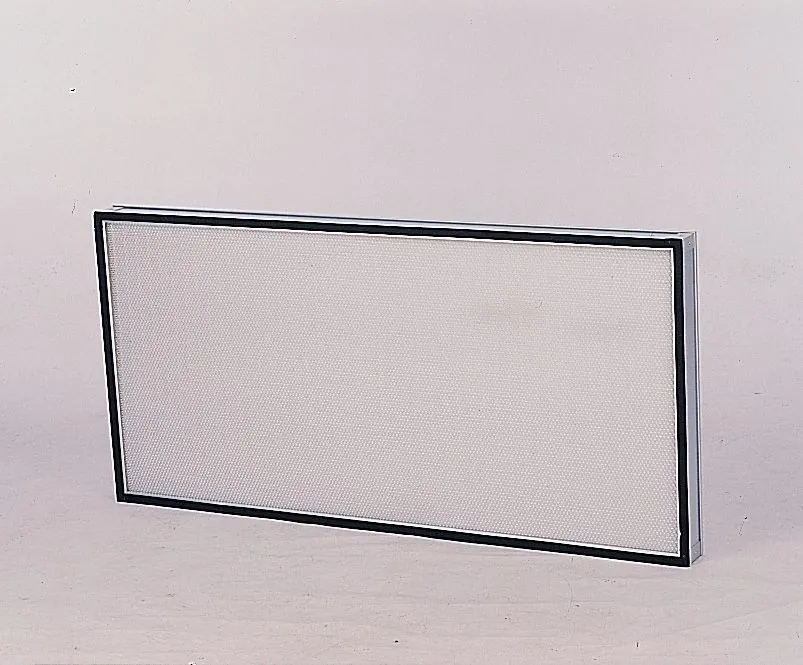
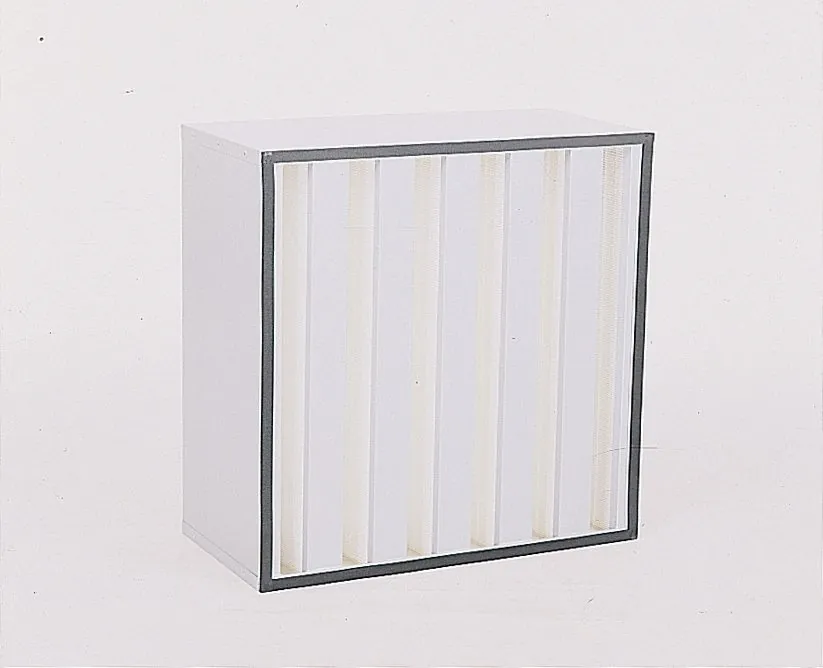
For a Yiding AR302 mini-pleat or AR303 V-bank enquiry, send the actual width × height × depth in mm, the required class and standard, design airflow in m³/h, allowable initial pressure drop in Pa, seal arrangement, housing drawing and quantity. Include the existing label and report when replacing a filter. State the documentation and site-acceptance requirements separately from the physical product description.
Request a quotation that identifies the proposed configuration and the agreed documentation scope. The quotation, drawing and acceptance plan should refer to the same operating duty. A product family name alone does not establish interchangeability with an existing installation. This structured enquiry helps resolve interface and evidence requirements before manufacture, while leaving installation acceptance tied to the actual site and its responsible team.
It does not establish the integrity of the assembled housing and seal. Use the site acceptance plan to define the required installed checks.
No. It is a simplified mass-balance illustration. It is neither a scanning-probe result nor an acceptance limit.
Not by itself. Classification and installed testing must be interpreted using their own methods, sampling boundaries and acceptance criteria.
Send dimensions, class and standard, airflow, pressure-drop requirement, housing and seal details, quantity, and the available label and report.