 YIDINGAIR FILTRATION
Get a quote↗
YIDINGAIR FILTRATION
Technical Guides
2026-09-27
H13 filters stop at least 99.95% of particles at the most penetrating particle size; H14 filters at least 99.995%. Here is what the EN 1822 classes mean and how to choose between them.
Key points
EN 1822 is the European standard for EPA, HEPA and ULPA filters. It rates filters at the most penetrating particle size (MPPS) — the particle size that passes the media most easily, usually between 0.1 and 0.25 µm for glass-fibre media. Testing at the hardest-to-catch size gives a conservative, comparable efficiency figure.
Each class has two limits: an overall (integral) efficiency for the whole filter, and a local efficiency that no single point on the filter face may fall below. The local limit is what the leak scan checks.
| Class | Overall efficiency | Local efficiency (scan) | Typical use |
|---|---|---|---|
| E11 | ≥ 95% | — | Pre-HEPA, general clean air |
| E12 | ≥ 99.5% | — | Hospital supply, process air |
| H13 | ≥ 99.95% | ≥ 99.75% | Most cleanrooms, operating rooms, FFUs |
| H14 | ≥ 99.995% | ≥ 99.975% | ISO 5 and cleaner, aseptic filling |
| U15 | ≥ 99.9995% | ≥ 99.9975% | Semiconductor and critical zones |
| U16 | ≥ 99.99995% | ≥ 99.99975% | Very critical process zones |
E10 and U17 also exist; the table shows the classes most often specified. ISO 29463 uses a parallel scheme — ISO 35 H corresponds to H13 and ISO 45 H to H14.
Start from your cleanroom design and the process it protects, not from the filter. H13 is the workhorse for ISO 7 and ISO 8 rooms, general pharmaceutical and hospital areas, and most fan filter units. H14 is chosen for ISO 5 and cleaner zones, aseptic processing and areas where regulators or customers specify it.
Many catalogues — including ours — also describe HEPA filters as 99.97% or 99.99% efficient at 0.3 µm. That figure comes from the US-style test at a fixed 0.3 µm particle size. Because EN 1822 tests at the MPPS, which is harder to capture, the two numbers cannot be converted exactly. If your specification names an EN 1822 class, ask the supplier for the class and the test report rather than inferring it from a 0.3 µm figure.
A small pinhole or a gap in the sealant can let unfiltered air through even when the overall efficiency is high. That is why H13 and higher filters are scanned individually across their whole face. After installation, filters in critical rooms should be scanned again in place: from our site experience, leaks most often appear at the gasket and the frame joint rather than in the media.
It is more efficient, but it also has a higher pressure drop and cost. Use H14 where the cleanliness class or specification requires it; H13 is the right choice for most ISO 7–8 applications.
Most penetrating particle size — the particle size at which a filter media is least efficient, typically 0.1–0.25 µm for HEPA glass-fibre media. EN 1822 rates filters at this size.
Not exactly. 99.97% is measured at 0.3 µm with a different method; H13 is ≥99.95% at MPPS. Ask for the EN 1822 class and test report if your specification requires one.
In cleanrooms, yes. Installed filters are scanned for leaks at the filter face and seal, and repaired or replaced if a leak is found.
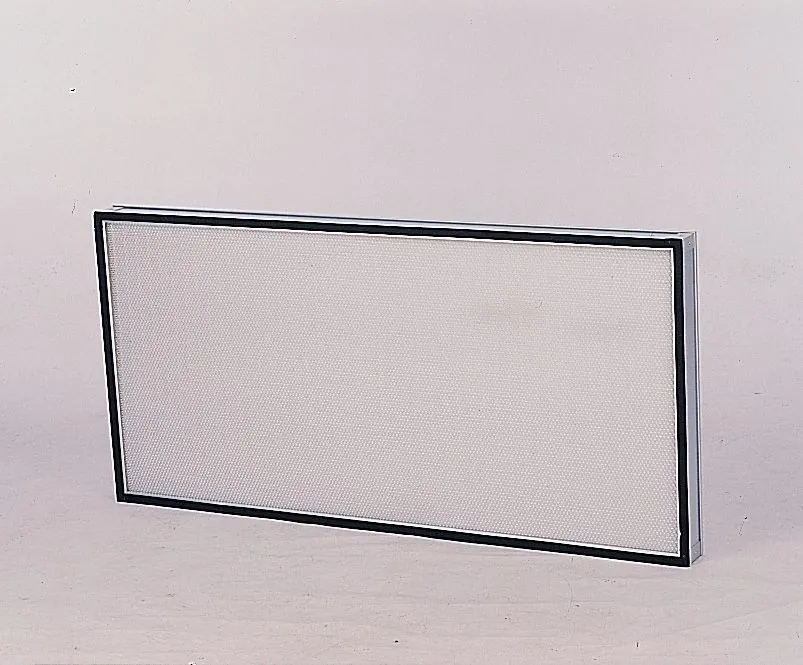
Low-profile filtration for critical clean environments.
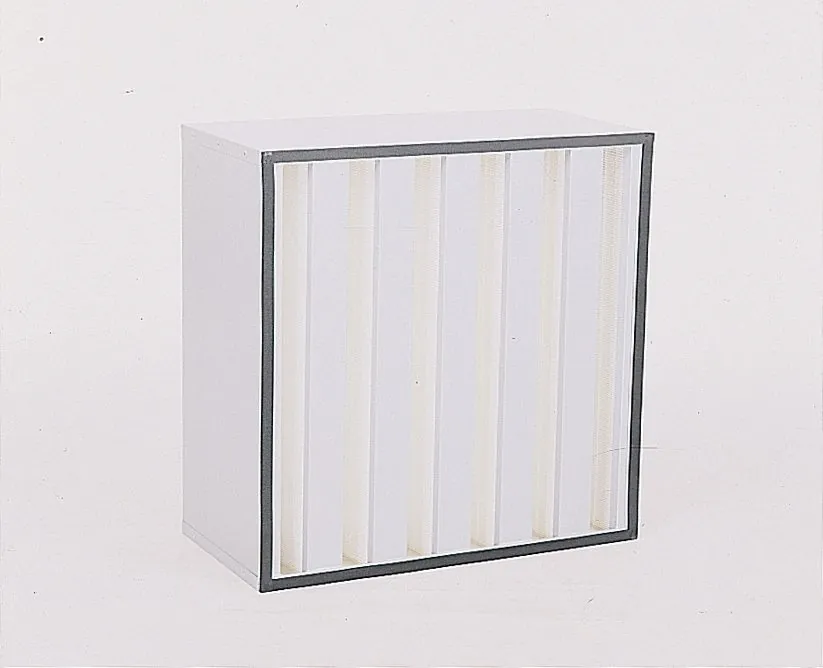
High-area filtration in a compact V-bank format.
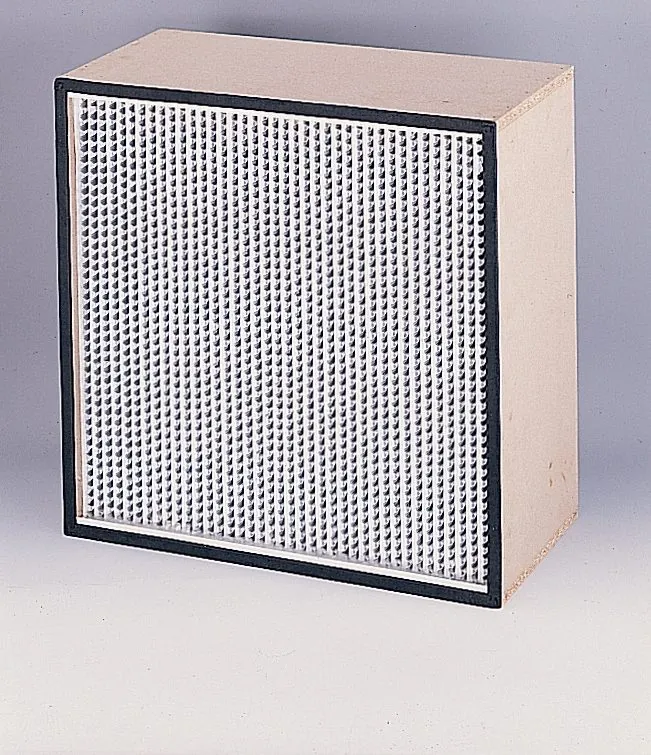
Deep-pleat filtration with corrugated separators.
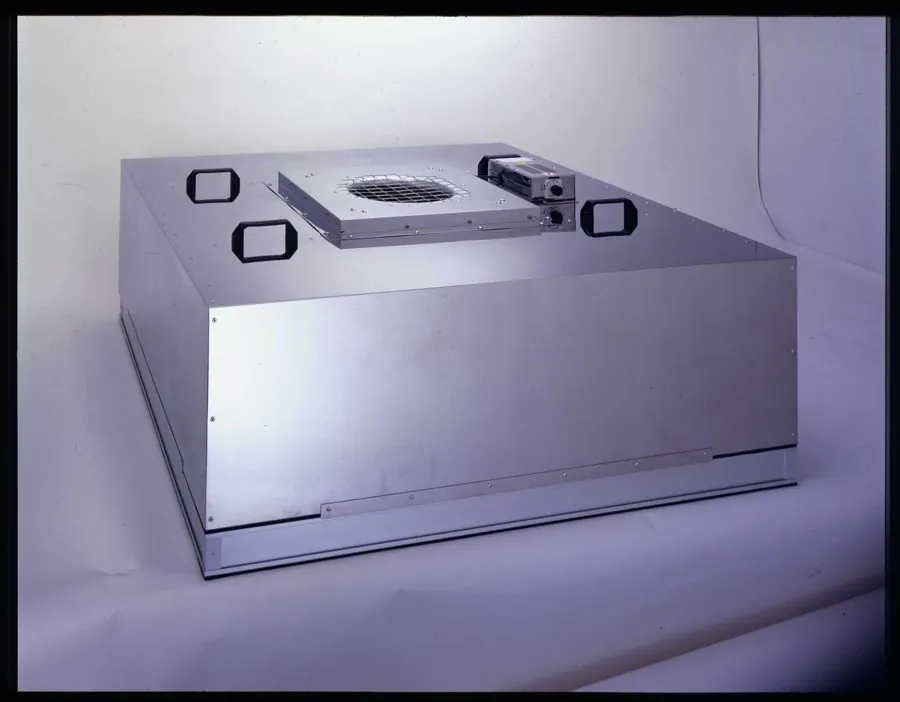
Integrated airflow and filtration for cleanrooms.