 YIDINGAIR FILTRATION
Get a quote↗
YIDINGAIR FILTRATION
Technical Guides
2026-10-30
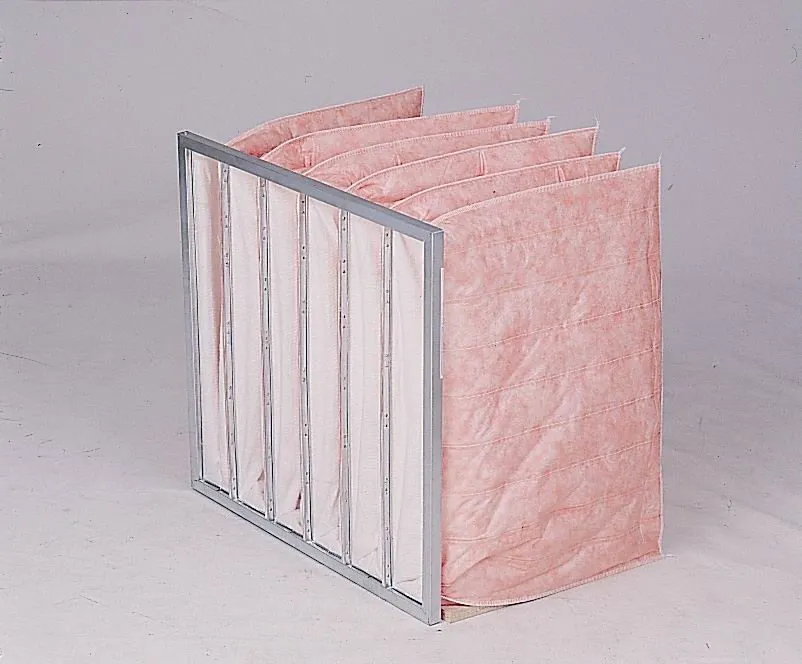
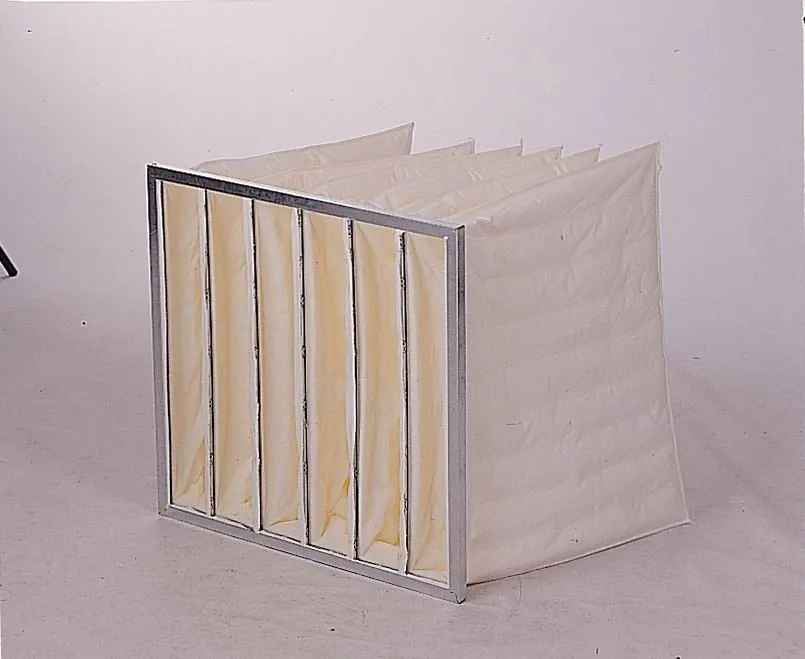
How to read a Camfil Hi-Flo item code, which ISO 16890 class and size it stands for, and how to order a glass-fibre pocket filter built to the same size, depth, pocket count and class.
Key points
Camfil lists each Hi-Flo filter with a code such as 0160 592x592x520-10. The first four digits are the efficiency family, the next three numbers are width × height × depth in millimetres, and the number after the dash is the number of pockets. So 0160 592x592x520-10 is an ePM1 60% bag filter, 592 × 592 mm on the face, 520 mm deep, with 10 pockets.
The code is usually printed on the label of the used filter. A photo of that label is the fastest way to get a matching quote.
| Hi-Flo family | ISO 16890 | EN 779 (former) | Nearest Yiding catalogue grade |
|---|---|---|---|
| 1060 | ePM10 60% | M5 | 40–45% dust-spot (MERV 9) |
| 2550 | ePM2.5 50% | M6 | 60–65% dust-spot (MERV 11) |
| 0160 | ePM1 60% | F7 | 80–85% dust-spot (MERV 13) |
| 0170 | ePM1 70% | F7 | 80–85% dust-spot (MERV 13) |
| 0185 | ePM1 85% | F9 | 90–95% dust-spot (MERV 14) |
Our catalogue grades are dust-spot ratings (ASHRAE 52.1), which do not convert exactly to ISO 16890. When you order against a Hi-Flo code, we build to the ISO 16890 class on the code and confirm it in the test report sent with the quote.
Hi-Flo uses the EN 15805 face sizes that most European air handling units are built for. Depths are 370, 520, 600 or 640 mm, with 6, 8, 10 or 12 pockets depending on size and class. The nominal airflow depends only on the face size.
| Face size W × H (mm) | Nominal airflow (m³/h) | Depths available (mm) |
|---|---|---|
| 592 × 592 | 3400 | 370, 520, 600, 640 |
| 490 × 592 / 592 × 490 | 2800 | 370, 520, 600, 640 |
| 287 × 592 / 592 × 287 | 1700 | 370, 520, 600, 640 |
| 287 × 287 | 800 | 370, 520, 600, 640 |
| 592 × 892 | 5000 | 370, 520, 600, 640 |
| 490 × 892 | 4100 | 370, 520, 600, 640 |
| 287 × 892 | 2500 | 370, 520, 600, 640 |
These are the full-size Hi-Flo filters most often found in air handling units. The pressure drop is Camfil's published initial value at 3400 m³/h. For each one we build a glass-fibre pocket filter with the same size, depth, pocket count and ISO 16890 class.
| Hi-Flo item code | ISO 16890 class | Depth / pockets | Initial pressure drop at 3400 m³/h |
|---|---|---|---|
| 1060 592x592x520-10 | ePM10 60% | 520 mm / 10 | 40 Pa |
| 1060 592x592x600-6 | ePM10 60% | 600 mm / 6 | 40 Pa |
| 1060 592x592x370-6 | ePM10 60% | 370 mm / 6 | 55 Pa |
| 2550 592x592x520-10 | ePM2.5 50% | 520 mm / 10 | 65 Pa |
| 2550 592x592x600-8 | ePM2.5 50% | 600 mm / 8 | 60 Pa |
| 0160 592x592x520-10 | ePM1 60% | 520 mm / 10 | 75 Pa |
| 0160 592x592x600-8 | ePM1 60% | 600 mm / 8 | 75 Pa |
| 0160 592x592x640-12 | ePM1 60% | 640 mm / 12 | 65 Pa |
| 0170 592x592x520-10 | ePM1 70% | 520 mm / 10 | 100 Pa |
| 0170 592x592x640-12 | ePM1 70% | 640 mm / 12 | 80 Pa |
| 0185 592x592x520-10 | ePM1 85% | 520 mm / 10 | 155 Pa |
| 0185 592x592x640-12 | ePM1 85% | 640 mm / 12 | 125 Pa |
Camfil and Hi-Flo are trademarks of Camfil AB. Yiding is not affiliated with Camfil. Hi-Flo data on this page is taken from Camfil's published product information (camfil.com, 2025) and is used only to identify the size and class to be matched.
It is built to the same face size, depth, pocket count and ISO 16890 class, so it fits the same frames and housings. Confirm the header depth and gasket when you order.
No. It is a different manufacturer's filter built to the same dimensions and class. Its performance is shown in our own test report, which we send with the quote.
Yes. We build to the face size and depth you need, including all the EN 15805 sizes in the table above.
Hi-Flo uses glass-fibre media, so for a like-for-like replacement we quote our glass-fibre pocket filter. A synthetic pocket filter is also available if you prefer it.