 YIDINGAIR FILTRATION
Get a quote↗
YIDINGAIR FILTRATION
Technical Guides
2026-09-27 · Updated 2026-10-30
Airborne molecular contamination passes straight through HEPA filters. How it is classified, why ammonia and acids matter to wafers and electronics, and how activated carbon and impregnated media are selected.
Key points
A modern fab can hold its particle counts at ISO class 3 or better and still lose yield to contamination that no particle counter sees. Airborne molecular contamination (AMC) is gas-phase contamination: acids such as HCl and SO₂, bases such as ammonia and amines, organic compounds and dopants. It occurs at concentrations far too low to smell, often parts per billion or below, yet high enough to change a surface.
Gas molecules are a fraction of a nanometre across, thousands of times smaller than the particles a HEPA filter is built to catch, and they do not stick to glass fibres the way particles do. They pass through unless something adsorbs or neutralises them. That is the job of chemical filtration.
The first well-documented case came from lithography. In the early 1990s, IBM researchers showed that chemically amplified photoresists, which rely on a small amount of photo-generated acid, were sensitive to airborne bases. Traces of ammonia or amines neutralise the acid at the resist surface, so the top of the exposed pattern does not develop and the lines take on a T-shaped profile, known as T-topping [4]. Since then, base control has been part of every lithography area.
Acids cause a different kind of damage. They corrode metal lines, contacts and bond pads, and they attack the copper and silver in control and power electronics. Condensable organics deposit on wafers, optics and reticles, and can change how films adhere. Dopants such as boron and phosphorus compounds can shift the electrical properties of devices.
The semiconductor industry groups AMC by chemical behaviour. SEMI F21 uses four families: acids (MA), bases (MB), condensable organics (MC) and dopants (MD), and sets classes by concentration for each [2]. ISO 14644-8 gives a general method for any cleanroom: air chemical cleanliness is expressed as an ISO-ACC class N, where the concentration of a substance or group is 10ᴺ g/m³, for concentrations from 10⁰ down to 10⁻¹² g/m³ [1]. A concentration of 1 µg/m³ (10⁻⁶ g/m³) is ISO-ACC class −6.
For control rooms, data centres and electrical rooms, the reference is ANSI/ISA-71.04, which classifies how corrosive the air is from the corrosion film that grows on copper and silver coupons in 30 days [3].
| Severity level | Copper reactivity | What it means |
|---|---|---|
| G1 Mild | < 300 Å | Corrosion is not a factor in equipment reliability |
| G2 Moderate | < 1,000 Å | Effects of corrosion are measurable and may affect reliability |
| G3 Harsh | < 2,000 Å | High probability of corrosive attack |
| GX Severe | ≥ 2,000 Å | Only specially designed and packaged equipment is expected to survive |
The 2013 edition of ISA-71.04 also requires silver reactivity, and the higher of the copper and silver results sets the severity level. Higher humidity raises the corrosion rate for a given gas concentration.
Chemical filters remove gases in two ways. Activated carbon adsorbs molecules physically onto its very large internal surface, which works well for most organic compounds. Small, reactive gases such as ammonia, HCl or H₂S are held only weakly by plain carbon, so the media is impregnated with a chemical that reacts with them (chemisorption) and locks them in place.
| Contaminant family | Examples | Media (Yiding grade) | Mechanism |
|---|---|---|---|
| Acids | HCl, HF, SO₂, NO₂ | KOH-impregnated carbon (MM-9000); encapsulated grade 875 | Adsorption + neutralisation |
| Bases | Ammonia, amines | Phosphoric-acid-impregnated carbon (MM-7000); encapsulated grade 147 | Adsorption + neutralisation |
| Organics / VOCs | Solvents, siloxanes, odours | Activated carbon (MM-3000); encapsulated grade 853 | Physical adsorption |
| Sulfur and oxidisable gases | H₂S, SO₂ | Permanganate alumina (MM-1000) | Oxidation |
Service life and removal efficiency depend entirely on site conditions. To select media and bed depth we need the target gases and their concentrations, the airflow, temperature and relative humidity, and the removal level or service life you require. Where the gas mix is unknown, air sampling at the intake or in the room is the first step, and reactivity coupons give a low-cost picture of how corrosive the air is.
Once installed, chemical filters are checked by measuring the air downstream, by exposing coupons, or by sending media samples for analysis of remaining capacity. Unlike particle filters, they give little warning through pressure drop, because media can be spent long before its resistance changes.
HEPA filters capture particles. Odours and other gases are molecules that pass through; they need activated carbon or chemical media.
It depends on the contaminant load. It is estimated from concentration, airflow and conditions, then confirmed by monitoring the outlet air or testing media samples.
Typically in the make-up air unit and in recirculation or FFU paths serving sensitive process areas, downstream of particle prefilters.
No. Chemical media can be exhausted with almost no change in pressure drop. Use downstream monitoring, coupons or media testing instead.
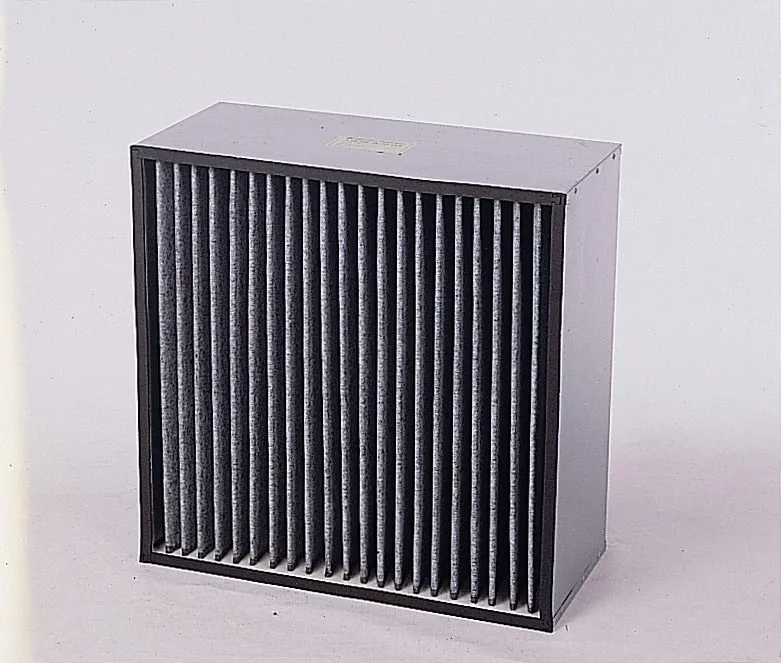
Gas-phase filtration for sensitive processes.
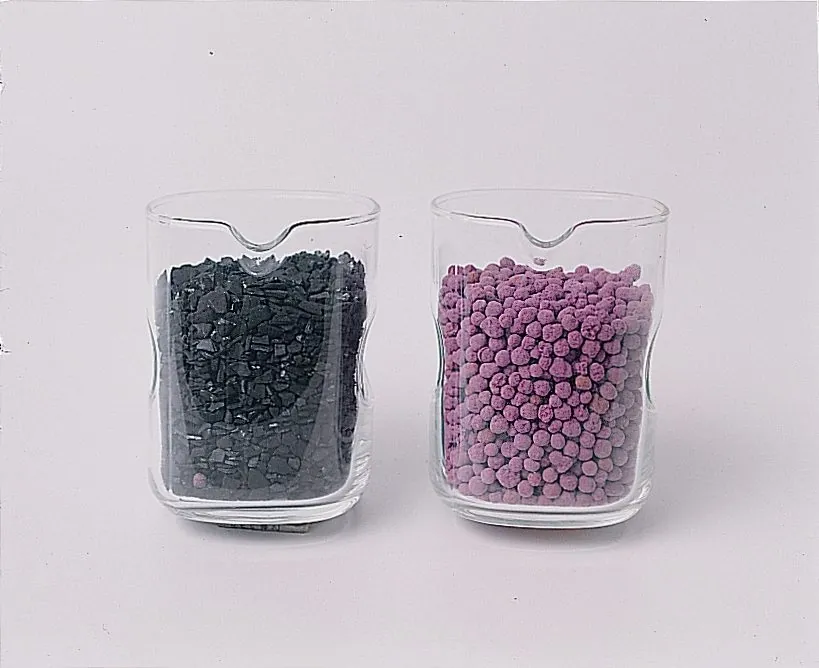
Adsorbent options for different gas contaminants.
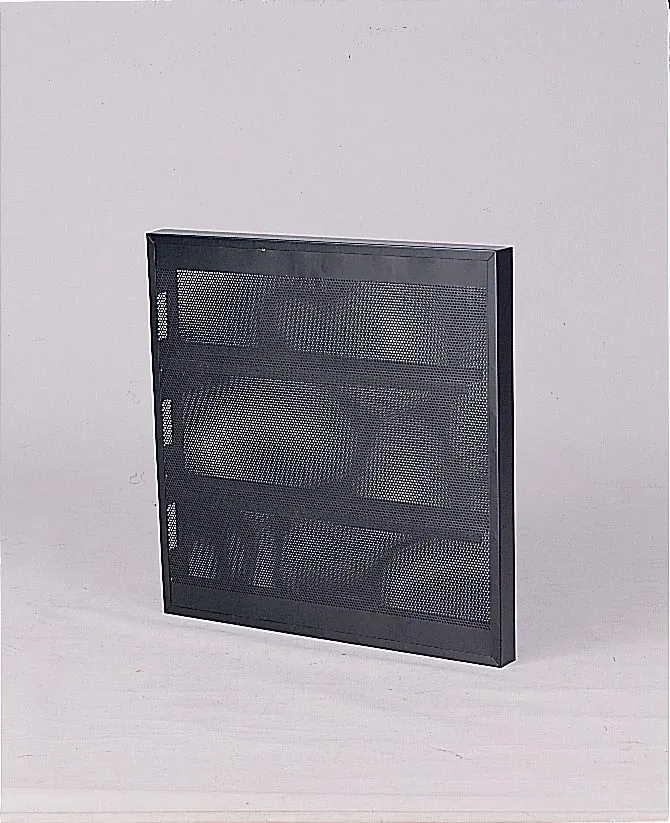
Packed media for gas-phase filtration.
A channel structure for gas-phase filtration.