 YIDINGAIR FILTRATION
Product overview
What it is and where it fits.
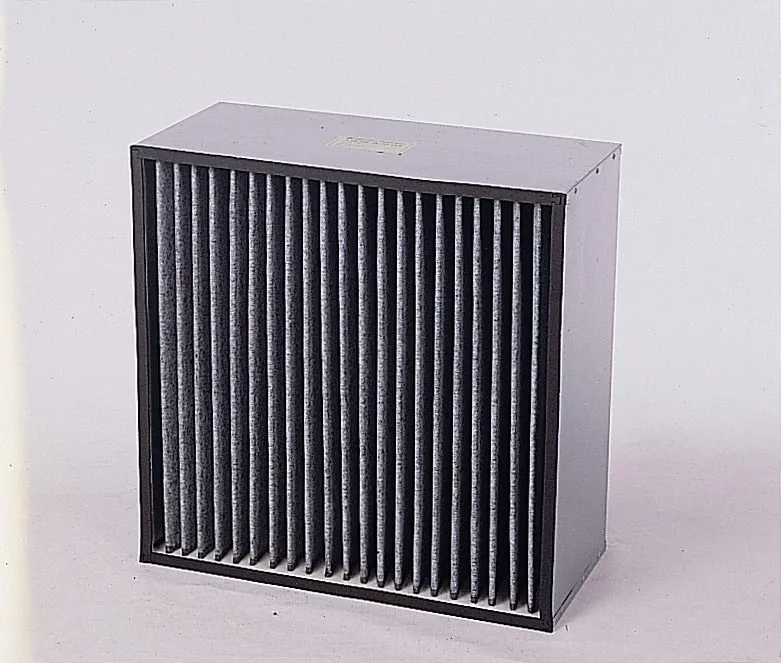
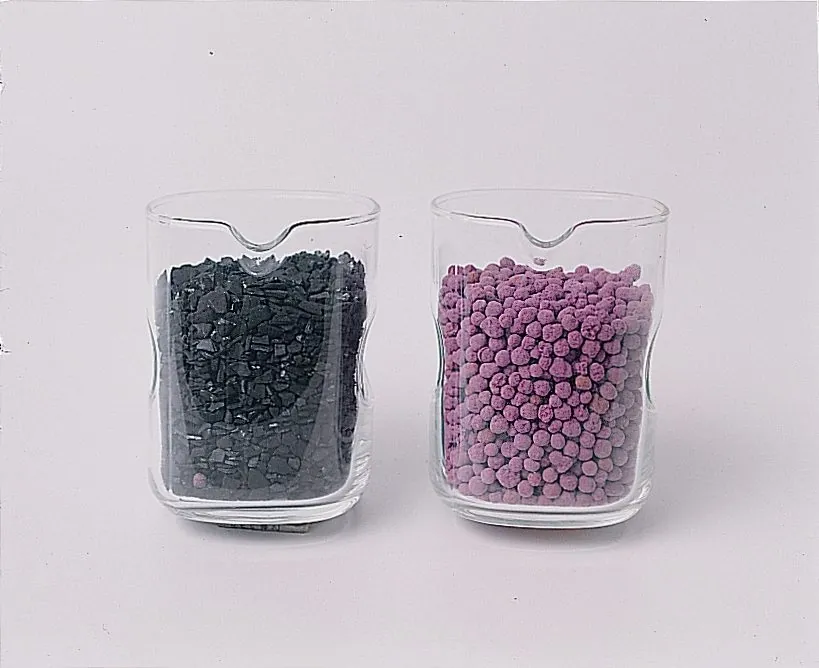
The AR502 packed-bed filter holds granular chemical media in a 1–2 inch frame to remove gaseous contaminants — odours, VOCs, acidic or alkaline gases and sulfur compounds — that particle filters cannot stop.
A high adsorbent loading suits higher contaminant concentrations at lower face velocities, where the air has more contact time with the media. The catalogue also describes V-arranged media trays with a 2-inch pleated prefilter, in black-painted cold-rolled steel, epoxy-coated steel or stainless steel.
- Filter type
- Packed granular adsorbent (gas-phase)
- Media
- Activated carbon or impregnated media, selected by target gas
- Depths
- 22 mm and 45 mm (1 / 2 in)
- Sizes
- 289×595 and 595×595 mm
- Rated airflow (catalogue)
- 170 m³/h (12×24 in), 340 m³/h (24×24 in)
- Frames
- Painted cold-rolled steel, epoxy-coated steel, stainless steel
- Removal efficiency
- Depends on site conditions
Typical applications
- Odour and VOC control in supply or recirculated air
- Acidic or alkaline gas control in industrial and laboratory air
- Sulfur-compound (H₂S) control
Construction & performance
Packed adsorbent design
Granular chemical media is filled into a 1–2 inch filter frame. A high adsorbent loading suits higher contaminant concentrations at lower face velocities where longer residence time is available.
Media & housing
Select adsorbent for VOCs, acidic gases, alkaline gases or sulfur compounds. The catalogue describes V-arranged trays with a 2-inch pleated prefilter. Frame options include black-painted cold-rolled steel, epoxy-coated steel or stainless steel.
Selection
Gas removal depends on the contaminant and operating conditions. Provide gas type, concentration, airflow, temperature and humidity for media selection.
Selection guide
How to choose.
Tell us the gas
Gas-phase filters are selected by chemistry. Provide the target gases, concentrations, airflow, temperature and humidity so we can choose the media and bed depth.
Low velocity for high loads
Packed beds work best at low face velocity, which gives more contact time — note the low rated airflow compared with particle filters of the same size.
Technical data
Specifications & dimensions.
Rated airflow in m³/h, pressure drop in Pa, actual dimensions in mm, nominal sizes in inches. Swipe tables sideways on small screens.
| Nominal size (in) | Actual size (mm) | Rated airflow (m³/h) | Initial pressure drop (Pa) | Removal efficiency |
|---|---|---|---|---|
| 12 × 24 × 1 | 289 × 595 × 22 | 170 | 62 | Depends on site conditions |
| 24 × 24 × 1 | 595 × 595 × 22 | 340 | ||
| 12 × 24 × 2 | 289 × 595 × 45 | 170 | 75 | |
| 24 × 24 × 2 | 595 × 595 × 45 | 340 |
Catalogue values at rated airflow. Test data for your exact configuration is available on request.
Original Yiding catalogue (Chinese) ↗FAQ
Common questions.
Why doesn't a HEPA filter remove odours or gases?+
HEPA filters capture particles. Gas molecules are far smaller and pass through; they must be adsorbed or chemically neutralised by media such as activated carbon.
How long does a carbon filter last?+
It depends on the gas type, concentration, airflow, temperature and humidity. Service life is estimated from these conditions and confirmed by monitoring.