 YIDINGAIR FILTRATION
Get a quote↗
YIDINGAIR FILTRATION
Technical Guides
2026-09-27 · Updated 2026-10-30
Replace filters by pressure drop and performance, not by the calendar. What the standards say about final pressure drop, what an overdue filter costs in fan energy, and how to plan a clean change-out.
Key points
Many sites change filters on a fixed schedule: every three months for prefilters, every year for pocket filters. A schedule is easy to plan, but it ignores what the filter is actually doing. The same filter may load in six weeks next to a busy road and last a year in a clean office building. Changed too early, a filter is thrown away with most of its dust capacity unused. Changed too late, it chokes the airflow and burns fan energy every hour it stays in.
The better guide is the filter's resistance to airflow, the pressure drop. It is easy to measure, it rises steadily as dust builds up, and both filter standards and air-handling-unit standards are written around it.
A new filter has an initial pressure drop set by its media, pleat or pocket geometry and the airflow through it. As particles collect on and inside the media, the open space between fibres shrinks and the pressure drop climbs. The curve is usually slow at first and steeper towards the end of life, because the dust cake on the surface starts to act as a filter of its own.
Efficiency changes too. For mechanical filters made of glass fibre, efficiency is stable or rises slightly as dust builds up. Some synthetic media rely partly on an electrostatic charge, and their efficiency can fall in service as the charge is neutralised. ISO 16890 accounts for this: the filter is also tested after a conditioning step that removes the charge, the class is based on the average of the efficiencies before and after conditioning, and the conditioned (minimum) efficiency is reported alongside it [2].
EN 13053, the European standard for air handling units, gives a simple rule for the recommended final pressure drop of general ventilation filters: the initial pressure drop plus 100 Pa, or three times the initial pressure drop, whichever is lower [1]. Filter makers quote the same rule in their datasheets. The design pressure drop of the system should also be checked, because a fan selected for a lower value may not be able to hold the airflow up to the filter's final value.
| Filter (typical class) | Initial pressure drop | Initial + 100 Pa | 3 × initial | Recommended final |
|---|---|---|---|---|
| Pleated prefilter (ePM10 50%) | 50 Pa | 150 Pa | 150 Pa | 150 Pa |
| Pocket filter (ePM1 60%, F7) | 75 Pa | 175 Pa | 225 Pa | 175 Pa |
| Pocket filter (ePM1 85%, F9) | 155 Pa | 255 Pa | 465 Pa | 255 Pa |
| Compact V-filter (ePM1 60%, F7) | 65 Pa | 165 Pa | 195 Pa | 165 Pa |
Initial pressure drops are typical published values at nominal airflow. Use the values on your own filter's datasheet or label.
The fan has to push air through every filter stage, so filter pressure drop is paid for in electricity. The power needed is the airflow multiplied by the pressure drop, divided by the overall efficiency of the fan, motor and drive [4].
Take one 592 × 592 mm filter at 3,400 m³/h, which is 0.944 m³/s. Every extra 100 Pa across it needs 0.944 × 100 / 0.6 ≈ 157 W at an overall fan efficiency of 60%. Over a year of continuous running (8,760 hours) that is about 1,380 kWh, for a single filter. An air handling unit with a bank of twelve filters left 100 Pa past its change point uses about 16,500 kWh a year more than it needs to.
This is also why Eurovent rates filters by energy class. Eurovent Guideline 4/21 calculates a filter's yearly energy use from its pressure drop over a standard dust loading, and the Eurovent rating standard RS 4/C/001 turns the result into classes from A+ to E [3]. A filter with a low initial pressure drop and a slow rise saves energy over its whole life, not just on the first day.
| Stage | Replace when | Also consider |
|---|---|---|
| Prefilters (panel, mesh) | Final pressure drop reached, or media visibly loaded | Washable metal and nylon filters can be cleaned instead |
| Medium efficiency (pocket, V-cell) | Final pressure drop reached | Torn or collapsed pockets: replace at once |
| HEPA / ULPA | Airflow or room cleanliness cannot be maintained, or a leak cannot be repaired | Prefilter condition: good prefilters extend HEPA life |
HEPA filters in cleanrooms are rarely changed on pressure drop alone. They sit behind two or three prefilter stages, load slowly and often stay in service for years. What matters is whether the room still meets its cleanliness class and whether the installed filter is free of leaks.
ISO 14644-2 sets out how a cleanroom is monitored to show that it stays within its class, including particle counts and airflow or pressure-difference checks [5]. ISO 14644-3 describes the installed-filter leak test, in which the downstream face and the seal of each filter are scanned with a particle counter or photometer [6]. In our own maintenance work, we treat a HEPA filter as due for replacement when room particle counts rise clearly above the design level, or when its airflow falls below about 70% of the initial airflow and cannot be restored by the fan. A leak found during scanning can often be sealed; if it cannot, the filter is replaced.
It depends on dust load, airflow and prefiltration. Replace it at its final pressure drop rather than after a fixed time. In clean environments that may take many months; in dusty ones, much less.
Usually not. Past the final pressure drop, the extra fan energy soon costs more than a new filter, and airflow to the rooms starts to fall.
No. Only filters designed to be washed, such as metal and nylon mesh prefilters, should be cleaned. Washing damages pocket and HEPA media.
Leaks usually occur at the seal or frame, which a factory test cannot check. An in-place scan confirms that the installed filter performs.
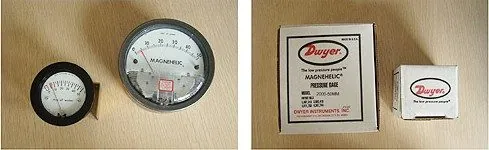
Monitor pressure differences across filters and rooms.
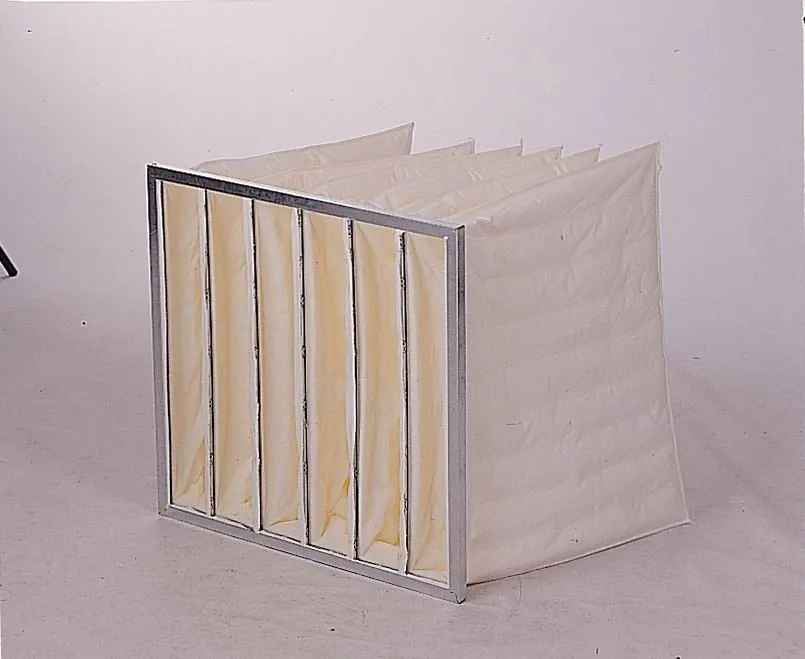
Multi-pocket filtration with synthetic fiber media.
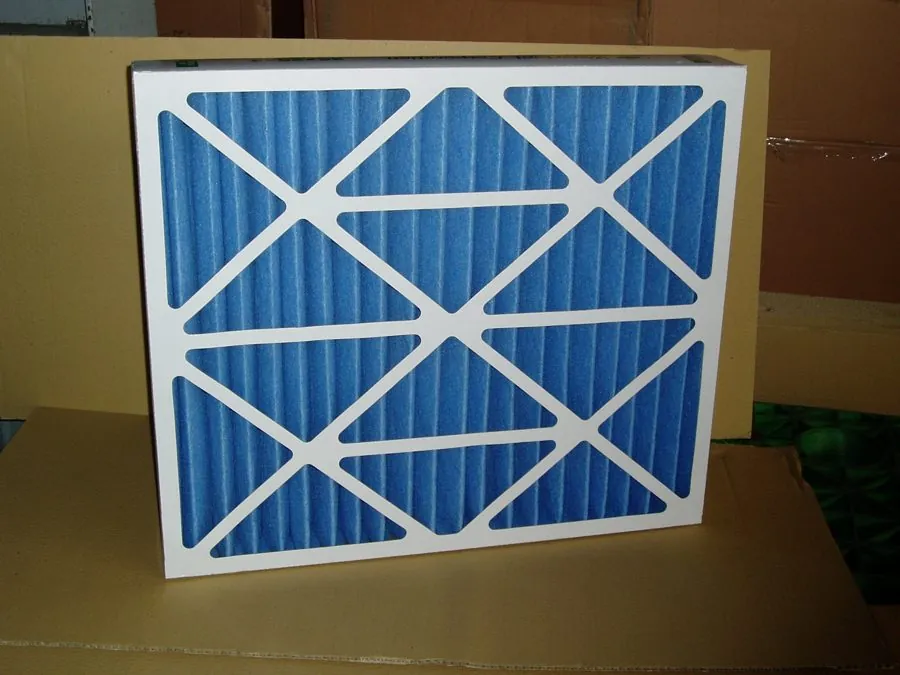
Pleated prefiltration for ventilation systems.
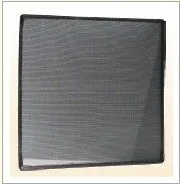
Washable mesh filtration for outdoor and return air.