 YIDINGAIR FILTRATION
Get a quote↗
YIDINGAIR FILTRATION
Technical Guides
2026-11-09
A matching HEPA class and outside size do not guarantee a matching installation. Compare gasket and gel seals, identify the mating interface, and prepare a replacement specification that can be checked against the housing.
Key points
For a replacement HEPA filter, choose the seal that matches the existing housing or ceiling system. A gasket seals when the intended mounting arrangement compresses it against a mating surface. A gel seal uses a mating knife edge and a channel containing sealing gel. Neither description, by itself, identifies a complete interchangeable assembly. Manufacturer housing literature shows separate gasket and gel arrangements for this reason. [1]
The practical purchasing question is therefore not “Which seal is best?” but “Which documented interface does this installation use?” Keep the HEPA class, filter dimensions and sealing arrangement as separate lines on the enquiry. Matching one does not establish the others. A quotation should explain the proposed interface rather than simply repeat “H14 replacement.”
In the gasket arrangement illustrated by MANN+HUMMEL, a perimeter gasket meets a continuous mounting surface and a locking mechanism compresses it. That is an example of an engineered assembly, not a universal instruction for every HEPA housing. [1]
For purchasing, record the gasket location, width, uncompressed thickness, material and whether it is continuous or joined. Obtain the required installation setting from the filter and housing supplier. There is no single compression percentage or bolt torque that can be copied safely across all gasket materials and retaining mechanisms. A visibly similar foam strip is not sufficient evidence of equivalence. Also identify the clamping points: replacing the filter should not depend on improvised packing or extra force to make an incompatible frame fit.
A gel-seal interface pairs a gel-filled perimeter channel with a compatible knife edge. The channel may be on the filter and the knife edge on the housing; the reverse arrangement also exists. HEPA Corporation describes both configurations, so “gel seal” alone does not tell a buyer which component contains the channel. [2]
Record channel location and geometry, knife-edge position and the specified engagement arrangement on a section drawing. Ask the supplier how the filter is guided, retained and stopped in its installed position. The answer should describe the complete assembly. Do not assume a gel filter is a drop-in conversion for a gasket housing, or that any blade entering any gel channel establishes the intended seal.
Use this comparison to prepare a drawing review, rather than to rank one technology above the other. It describes common arrangements; the approved housing design determines the actual requirements. Camfil lists gasket, knife-edge and gel-channel options within its panel-filter range, illustrating why the interface must be selected explicitly. [3]
| Specification item | Gasket arrangement | Gel arrangement |
|---|---|---|
| Sealing interface | Gasket and its specified mating surface | Gel channel and compatible knife edge |
| Installation detail | Specified gasket compression and retention | Specified channel engagement and retention |
| Drawing information | Seal location, width, thickness and contact surface | Channel geometry, knife-edge location and installed position |
| Compatibility decision | Confirm filter, gasket, housing and clamps together | Confirm filter, gel, housing and knife edge together |
Record actual filter width, height and frame depth in mm. If the existing label uses a nominal size in in, retain that label as an identifier but measure the actual component. Add a drawing showing airflow direction, upstream and downstream faces, the sealing plane and the housing opening. A front photograph cannot show every critical depth or offset.
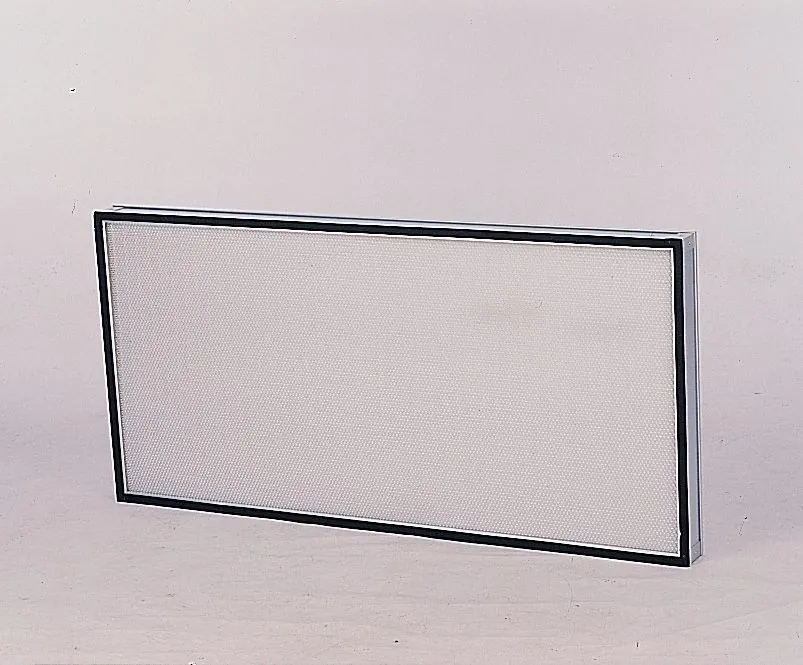
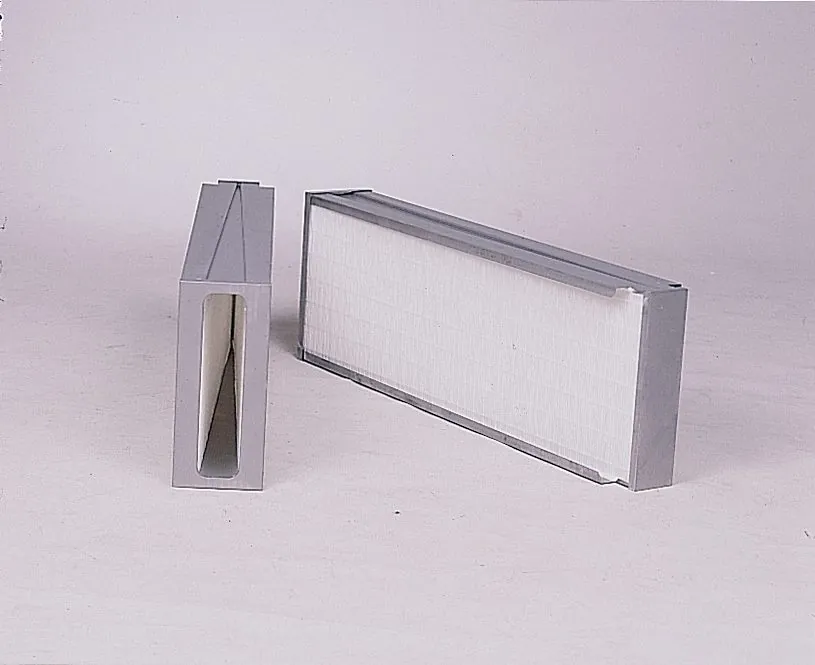
For a gasket filter, identify which face carries the gasket and where it contacts the housing. For a gel system, distinguish the outside frame dimensions from the channel dimensions and the position of the mating knife edge. Photograph a corner, a straight section and the retaining mechanism where access permits. These are enquiry records, not instructions to dismantle an operating installation. Have the responsible maintenance team arrange access and measurement under the site's procedure.
Ask for the proposed gasket or gel material by specification, not by colour. Include the normal operating temperature, any exceptional temperature exposure, humidity conditions and the cleaning or decontamination agents used around the assembly. Identify whether exposure is occasional surface cleaning or a defined process cycle. The supplier can then review the particular material and application instead of making an unsupported compatibility promise.
Do not transfer temperature limits or chemical-resistance statements from a different manufacturer's product. If a quotation proposes a different material from the existing drawing, request a written explanation of its suitability and any installation changes. A material substitution and an efficiency-class substitution are different decisions and should be reviewed separately.
Plan how the new filter will be handled, installed and checked before the replacement arrives. Camfil's replacement guidance distinguishes cleaning a gel-system knife edge from cleaning a gasket-system contact face, and warns against over-tightening during installation. Use the instructions for the actual equipment rather than treating a general article as an installation manual. [4]
A factory filter report does not describe the condition of a different housing after field installation. Agree the required installed-system checks, test access and acceptance criteria with the site's responsible team. ISO 14644-3:2019 provides cleanroom test methods; BSI identifies installed filter system leakage testing within that standard. Specify the applicable procedure for the project instead of assuming a seal description proves acceptance. [5] [6]
Keep the delivered filter identification, approved drawing, material specification and acceptance record linked in the maintenance file. That gives the next replacement enquiry a traceable starting point.
Send a single package that allows the filter and its housing to be reviewed together. Mark dimensions as measured or taken from a drawing, and include the drawing revision. State which details must remain unchanged and whether a proposed interface change is even within the scope of the purchase. Our recommended enquiry checklist is:
Ask Yiding to review the filter and mating-interface details together when discussing an AR302 mini-pleat filter or a filter housing. Final configuration and manufacturing feasibility are confirmed after review of the requirements; a matching outside size alone is not a fit confirmation.
Only when the complete housing interface is compatible or an approved conversion is provided. A matching outside size and HEPA class do not establish that compatibility. Have the channel, knife edge, seating position and retention arrangement reviewed before ordering.
No. The seal description identifies the mounting interface, while the specified HEPA class identifies filtration performance under its applicable test method. Request the filter classification and the installation details separately.
No. Obtain the installation setting for the actual gasket, housing and retention design. Do not reuse a compression or torque value taken from an unrelated product or a different sealing material.
It is part of the documentation, but it does not replace the project’s required checks after installation. Agree the installed-system test method, access and acceptance criteria with the responsible site team before delivery.