 YIDINGAIR FILTRATION
Get a quote↗
YIDINGAIR FILTRATION
Technical Guides
2026-11-17
An FFU has its own fan; a passive terminal HEPA module relies on an external air supply. Compare airflow, pressure, maintenance and procurement requirements before choosing.
Key points
A fan filter unit (FFU) combines a fan with a high-efficiency filter. A passive terminal HEPA filter module sits at the final air outlet and receives air driven by a fan elsewhere in the system. The main selection question is therefore where the pressure needed to move air is generated. Neither arrangement is automatically cleaner, quieter or more economical.
This guide uses “terminal module” to mean a passive unit: commercial names can overlap, and some terminal products also contain fans. Check the assembly drawing rather than deciding from the product name alone. Camfil describes integrated FFUs, while MANN+HUMMEL shows both duct-connected modules and fan-powered assemblies. [1][2] The comparison below concerns system architecture, not a claim that different manufacturers’ products are interchangeable.
Draw the air route from intake or return to the room, including any mixing point, prefilter, cooling section, fan, duct and final filter. For an FFU, identify what feeds its inlet and how air returns. For a passive module, identify the upstream fan and the duct branch supplying it. This simple drawing reveals dependencies that a filter-size comparison misses.
An FFU can provide local air movement, but it does not by itself supply outdoor air, remove all heat or establish the correct room pressure. A passive module needs sufficient external supply pressure at its connection. In either layout, the supply, return and exhaust arrangements must work together. A module that physically fits the grid may still be unsuitable if its inlet is obstructed or its return path is inadequate.
A HEPA class describes a filter under its applicable classification and test conditions. A cleanroom class describes the room environment. ISO 14644-1 classifies air cleanliness by airborne particle concentration. [3] Specifying a filter class alone therefore does not establish the finished room classification.
Keep the procurement requirements distinct: the filter classification standard and class, the required airflow, the room classification objective and the agreed operating state. Then consider people, processes, particle sources and airflow distribution with the project designer. Buying a higher filter class cannot compensate automatically for poor air distribution or a leaking interface. Likewise, installing more FFUs is not a substitute for defining how the completed room will be evaluated.
Ask for performance at the intended airflow in m³/h. For an FFU, determine the pressure boundary used for the stated duty: does the available pressure include its filter and internal components, and what external resistance can it accommodate? For a passive module, ask which losses are included in its quoted pressure drop in Pa. Compare like boundaries rather than placing unrelated catalogue numbers beside one another.
Allow for the selected filter’s loading condition and the agreed replacement criterion. A low clean-filter resistance does not establish the operating margin later in service. Check the fan selection, adjustment range and control response with the system designer. Do not adopt a universal final pressure-drop value: it must be compatible with the selected filter, housing and required delivery of air.
Use this table as a design-review checklist. Actual construction and controls vary by model, so each answer should be confirmed for the proposed configuration. The presence or absence of a local fan explains the basic difference; it does not decide every performance outcome.
| Selection point | FFU | Passive terminal HEPA module |
|---|---|---|
| Air-driving fan | Integrated in the unit | Located elsewhere in the air system |
| Supply coordination | Check inlet conditions and local fan duty | Check duct connection and available supply pressure |
| Electrical and control scope | Confirm power, speed control and communication | Confirm upstream fan and any separate controls |
| Service access | Provide access to fan, controls and filter | Provide access to filter, seals and any damper |
| Replacement planning | Check filter interface and motor service route | Check replaceable-filter or disposable-module design |
| Acceptance evidence | Agree unit data and installed-system checks | Agree unit data and installed-system checks |
Room-side access can be valuable where the ceiling void is difficult to enter, but the phrase does not define every service operation. Ask separately how the filter, fan, controller and any damper are accessed. Confirm the removal route, lifting clearance, isolation arrangement and method of protecting the room during maintenance. A replaceable filter and a disposable module also imply different spare-parts plans.
For replacement work, record the actual dimensions in mm, support details, sealing interface, retaining arrangement and required access space. Nominal ceiling-grid dimensions are insufficient. Agree which components remain in place and which are replaced. Include identification and maintenance records so that the next replacement does not depend on guessing from an old photograph.
An FFU transfers part of the air-moving duty to a local motor; a passive terminal transfers that duty to an upstream fan. Compare the complete system at the same useful delivered airflow, operating hours and resistance assumptions. Include the equipment relevant to each arrangement and document the boundary. A motor nameplate or a clean-filter pressure drop alone cannot establish annual operating cost.
Noise comparisons also need a common basis. Ask whether a quoted value is sound power or sound pressure, and request the test condition and operating point. The room, ceiling, number of sources and measurement location affect the installed result. Compare matched evidence rather than choosing the smallest number in two different brochures. Neither architecture has a universal energy or acoustic advantage.
Agree how airflow, room pressure and filter-system integrity will be checked after installation, alongside the project’s room-classification requirements. ISO 14644-3 provides cleanroom performance test methods. [4] The commissioning plan should identify responsibilities, operating state and acceptance criteria before delivery; a unit’s factory paperwork and the installed room assessment serve different purposes.
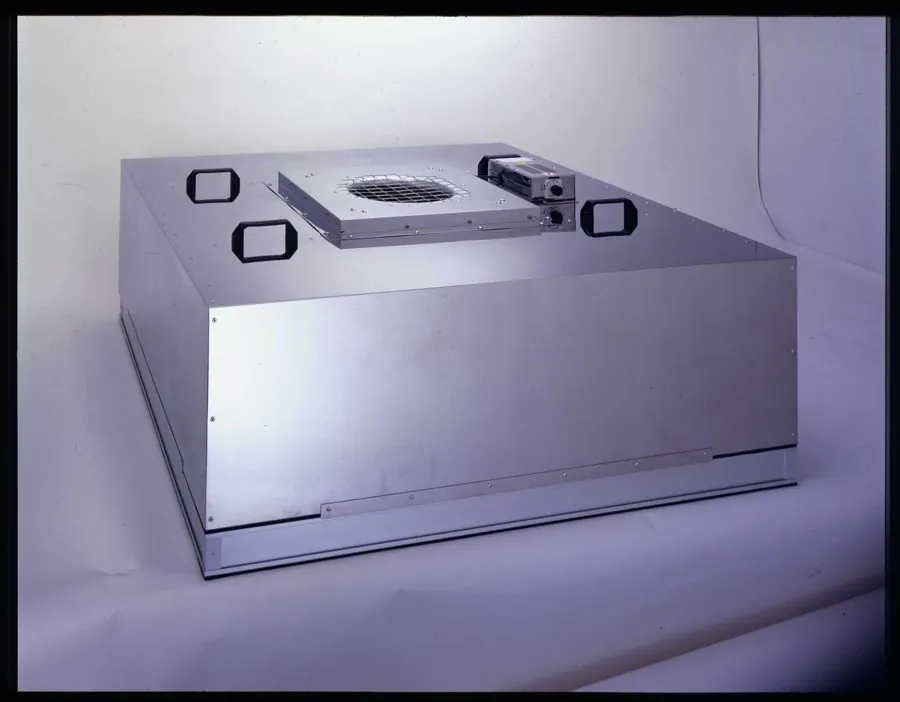
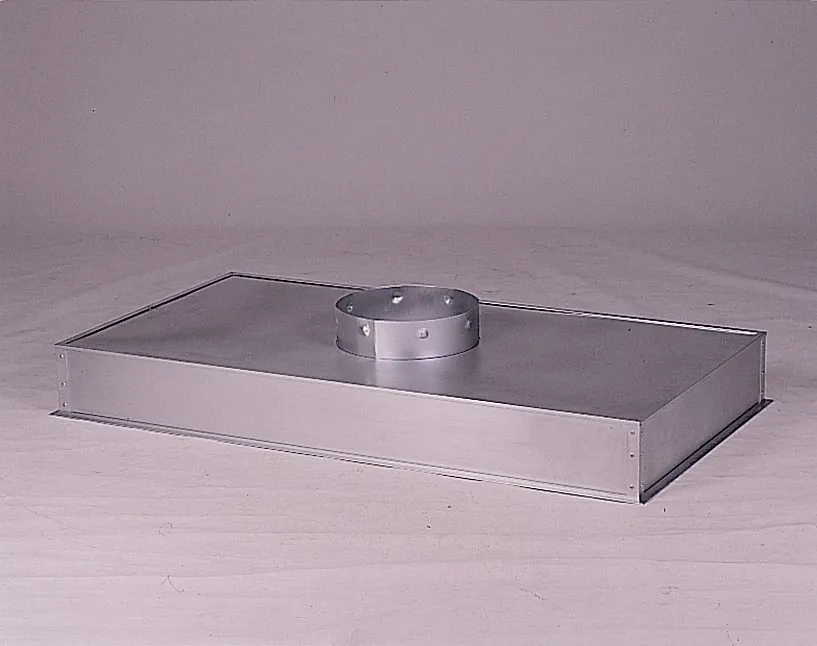
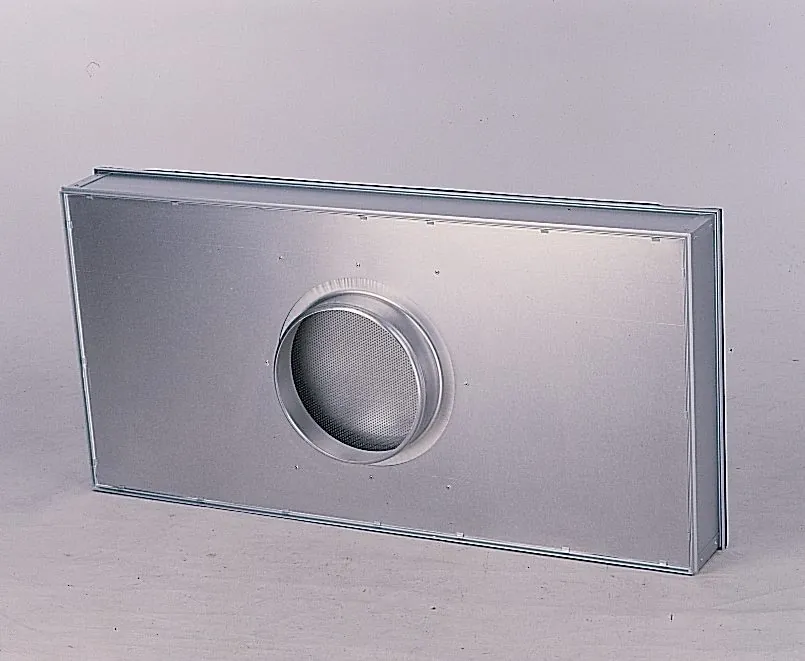
For a Yiding enquiry, describe whether you need an AR603 fan filter unit, an AR601 room-side replaceable filter module or an AR602 disposable terminal module. Send the following information so the proposed configuration can be reviewed against your system. Product-specific airflow, pressure, sound and electrical data should belong to that configuration, rather than being inferred from another size.
No. This guide compares an FFU with a passive terminal module. Product naming varies, so confirm whether the proposed assembly includes a fan and motor.
Not from size alone. Review inlet and return paths, pressure conditions, electrical supply, controls, mounting and commissioning requirements before approving a change.
No. Filter classification and room classification describe different things. Room performance also depends on installation, airflow distribution and particle sources.
There is no universal winner. Compare complete systems at the same delivered airflow, resistance assumptions and operating schedule.
Depending on the design, yes. Confirm the actual filter interface and access route; also check how other components are serviced.